The most rewarding Egypt trips beyond Cairo follow the Nile without overlooking the country’s other landscapes. For a first visit, consider four routes: add Alexandria, sail between Luxor and Aswan, combine Cairo with Luxor and Aswan on a multi-day itinerary, or pair ancient sites with time by the Red Sea.
Cairo’s landmarks make a natural starting point, but Egypt’s character shifts as you travel south. Grand temples and Nile scenery give way to the slower pace of a cruise, while Alexandria offers a distinct coastal perspective.
This guide explains what each route offers and how to match it to your interests and available time. You’ll see where a Nile cruise fits, how combining destinations affects the itinerary, and how to leave time to enjoy each stop rather than rushing through it.
Key Takeaways
- Choose Alexandria for a coastal contrast, or focus south on Luxor and Aswan for temples and Nile scenery.
- A Nile cruise can connect Luxor and Aswan; typical itineraries include 3-5 nights aboard.
- Combine Cairo with Luxor and Aswan when you want a broader itinerary, and allow 10 days to 2 weeks for these destinations.
- Look beyond Giza: Saqqara, Dahshur, and Abusir offer a wider view of Egypt’s pyramid landscape.
- Plan travel between cities around your chosen route and pace, especially when adding time by the Red Sea.
1. Potential trips to Alexandria, Luxor, and Aswan
Alexandria, Luxor, and Aswan offer three distinct ways to extend a Cairo itinerary. Alexandria brings Mediterranean light, layered history, and museums; Luxor and Aswan reveal temples and Nile landscapes. For Egypt trips beyond Cairo, choose destinations for the experiences you want, then allow enough time to enjoy each setting.
In Alexandria, combine the Bibliotheca Alexandrina with the waterfront and the city’s Greco-Roman heritage. The modern library contrasts with ancient sites, while the Alexandria National Museum provides context for artifacts from different periods. For a more relaxed afternoon, stroll the Corniche and explore the historic center. Together, these stops introduce the city beyond its coastal views.
A trip combining Alexandria and Faiyum balances urban history with open landscapes. Faiyum’s Wadi El Rayan and Lake Qarun offer a different kind of outing, while Tunis village is known for its pottery workshops. This route suits travelers interested in both culture and scenery. Set the sequence according to your priorities rather than trying to squeeze every stop into a rushed day.
Alexandria shore excursions work best when you group nearby sights and leave time for the return to port. Choose a focus, such as the Bibliotheca Alexandrina and waterfront, or ancient heritage sites and a museum. A planned route makes the visit easier to manage. Check port timing and local transport arrangements before setting out, especially if you plan to visit more than one area.
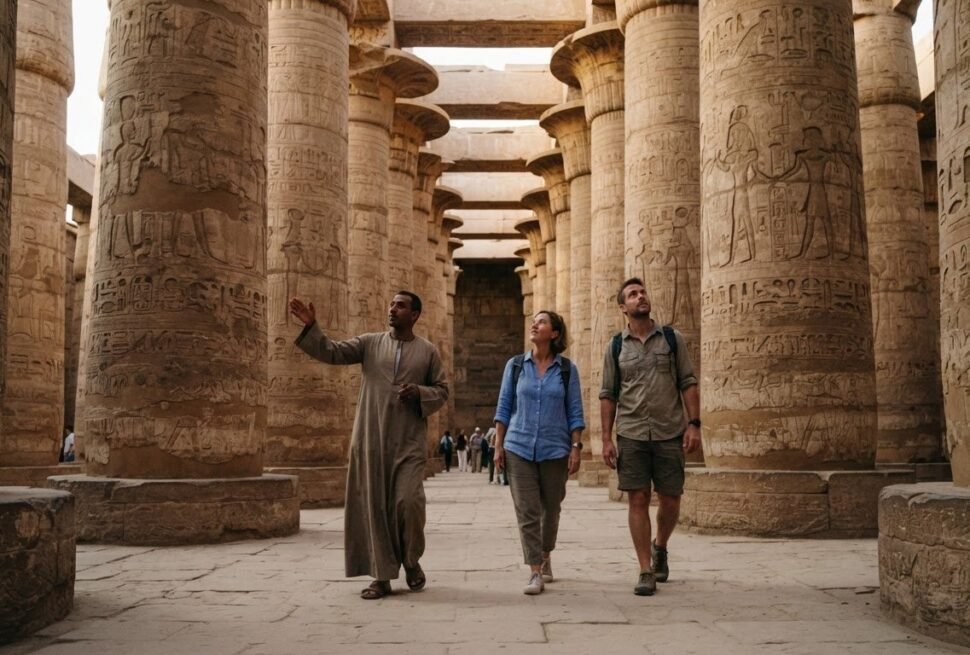
In Luxor, a strong first visit pairs Karnak Temple with the Valley of the Kings or Hatshepsut’s temple at Deir el-Bahari. In Aswan, visit Philae Temple and take in the Nile’s island scenery; Abu Simbel is a memorable addition. These sights suit travelers drawn to ancient monuments. Choose between temples, tombs, and river views according to your interests and available time.
For a broader journey, connect Alexandria’s coastal character with Luxor and Aswan’s monumental sites. A Nile cruise can link Luxor and Aswan, with itineraries typically including 3-5 nights aboard. Keep Abu Simbel as a separate planning choice, since adding it changes the route’s pace. According to the Egyptian Ministry of Foreign Affairs, a passport for travel to Egypt should be valid for at least six months beyond arrival.
3. Multi-day itineraries combining Cairo with Luxor, Aswan, and Abu Simbel
A multi-day route can bring together Cairo’s collections and southern Egypt’s temples. Begin with the Egyptian Museum in Cairo, then travel to Luxor for Karnak and the Valley of the Kings. Continue to Aswan for Philae Temple and Nile scenery. This sequence gives first-time visitors a clear introduction to different periods of Egyptian history, rather than a string of disconnected stops.
Allow 10 days to 2 weeks for Cairo, Luxor, and Aswan, a practical span for travelers who want time in each place. Use the Cairo days for the Egyptian Museum and the city’s major historic sights. Then dedicate the southern part of the itinerary to Luxor and Aswan, where distances between temples and river visits shape the day. Add Abu Simbel only after deciding how much travel time you want beyond Aswan.
In Luxor, group the East Bank sights, such as Karnak Temple, separately from the West Bank’s tombs and monuments. That simple step reduces backtracking and leaves room to appreciate the settings. In Aswan, Philae Temple makes a beautiful contrast with Luxor’s larger temple complexes. A Nile cruise can connect the two cities; typical itineraries include 3-5 nights aboard, so consider whether a leisurely river passage suits your schedule.
For travel outside Cairo, follow local instructions, use established transport arrangements, and keep your passport secure when moving between cities. Desert journeys and visits to remote sites call for careful planning around the route, water, and timing. Leave room between connections, particularly if your itinerary includes both Abu Simbel and a Nile cruise.
Treat permits and guide arrangements as specific to each site, including Abu Simbel and Siwa Oasis. These are separate destinations reached by different routes, so don’t assume the same access arrangements apply to both. Plan each visit around its transport and entry requirements, and keep the relevant details with your itinerary.
Before departure, map the route in order: Cairo, Luxor, Aswan, then Abu Simbel if it fits your pace. Keep Cairo’s museum visits together, and leave the southern section flexible enough for temple visits and river travel. For a wider itinerary shaped around these destinations, explore Egypt beyond Cairo journeys.
4. Pyramids at Saqqara, Dahshur, and Abusir
Giza’s famous monuments are only part of Egypt’s pyramid landscape. More than 120 pyramids are scattered across Lower Egypt, including sites at Saqqara, Dahshur, and Abusir. These destinations offer a rewarding change from Cairo’s busy streets and familiar attractions. Each adds a different perspective on ancient architecture and the culture that shaped it. Plan a visit around the sites that most interest you, rather than treating every stop as interchangeable.
At Saqqara, the Step Pyramid of Djoser is the essential landmark. It dates to the 27th century BC and offers a striking example of pyramid design. The surrounding necropolis gives the visit a broader setting than a single monument. Take time to notice how the structure’s stepped form differs from the smooth-sided pyramids commonly pictured in travel guides. For travelers interested in how Egypt’s monumental architecture developed, Saqqara makes a compelling starting point.
Dahshur adds another perspective on pyramid architecture. The Bent Pyramid changes angle partway up, while the Red Pyramid has a familiar smooth-sided profile. Seeing both lets visitors compare their forms directly rather than relying on displays or photographs. Abusir adds another archaeological landscape to the wider route. Together, these sites make a pyramid visit a deeper exploration of Egypt’s ancient history.
To make the day flow, choose a starting site and group the remaining visits along your route. Saqqara and Dahshur can anchor a day focused on pyramid architecture; add Abusir if its archaeological setting is a priority. Allow enough time at each monument: moving quickly between attractions can make the day feel like a checklist. A guide can also explain details that are easy to miss, such as a change in a pyramid’s shape.
These sites suit travelers looking beyond a single iconic photograph. Saqqara’s Step Pyramid is a striking focal point, while Dahshur’s contrasting silhouettes invite comparison. Abusir adds another layer for visitors curious about less familiar pyramid landscapes. Together, the locations deepen an Egypt itinerary without requiring time in Cairo’s market culture or a walk through Khan el-Khalili’s street stalls.
Before setting out, decide whether you’re most interested in architectural comparisons, archaeological context, or a quieter visit away from central Cairo. Then arrange transport and visits in a practical order, allowing enough time to explore each site. Saqqara, Dahshur, and Abusir reward a slower pace: their forms and surroundings are part of what makes these ancient places meaningful.

4. How many days should you spend in Luxor, Aswan, and the Red Sea?
There’s no single ideal itinerary length for Luxor, Aswan, and the Red Sea. Let your priorities set the pace: temple visits in Luxor, Nile experiences around Aswan, or time beside the water in Hurghada. A traveler focused on ancient sites needs a different rhythm from someone seeking a gentler balance of monuments and coastal rest. Build the route around the places you most want to experience.
In Luxor, decide whether to explore both banks of the Nile or focus on selected landmarks. Karnak Temple and Luxor Temple anchor visits on the East Bank, while the Valley of the Kings and Hatshepsut’s temple are across the river. Group nearby sights to make each day more manageable. Allow time for the scale of the sites and for travel between them.
Aswan offers a quieter riverside atmosphere and a different set of landmarks. Philae Temple suits visitors interested in ancient architecture, while a felucca ride offers a slower view of the Nile. Abu Simbel can extend the journey beyond Aswan, so consider it when deciding how much time to spend traveling in southern Egypt. Let your priorities determine whether the visit centers on temples, scenery, or both.
A Nile cruise can shape the itinerary rather than simply fill a gap between destinations. Typical cruise itineraries include 3-5 nights aboard. That time connects river travel with visits along the route, while reducing the need to plan every transfer separately. Choose a cruise that fits the direction of your journey, then allow enough time around it for Luxor and Aswan’s sights.
Hurghada changes the character of the trip. After temple visits and river scenery, the Red Sea offers time for swimming, diving, or a slower coastal stay. How long to spend there depends on whether you want a brief pause or to make the coast a central part of the journey. Consider how the shift from cultural sightseeing to seaside relaxation suits your travel style.
Plan the sequence by listing your priorities first: Luxor’s temples, Aswan’s river setting, Abu Simbel, or Hurghada’s coast. Then account for travel between destinations and, where possible, separate demanding sightseeing days. A Nile cruise can link Luxor and Aswan, while the Red Sea fits best when its place in the route supports rather than interrupts your plans.
For a balanced itinerary, give each destination a clear purpose. Pair Luxor with temple visits, Aswan with Philae and river scenery, and Hurghada with time to relax by the water. Add Abu Simbel if its monuments are a priority. This approach helps you decide how much time suits your interests without squeezing every stop into a rushed schedule.
5. How do you travel between Cairo, Luxor, Aswan, and Hurghada?
Choose your route first, then match each leg to your preferred pace. From Cairo, travelers can reach Luxor by train, domestic flight, or road. The best option depends on your schedule, comfort, and how much time you want to spend in transit. Compare arrival points with your next activity, since a convenient departure can still mean extra ground travel later.
For travel from Cairo to Aswan, consider a domestic flight or rail journey. A flight can simplify a tight itinerary, while rail travel keeps the journey on land and may connect naturally with onward plans in southern Egypt. Before booking, compare departure and arrival stations with your sightseeing plans. Visits to Philae Temple and the Nile may influence where you want to begin.
Luxor and Aswan can be connected by rail, road, or a Nile cruise. A cruise makes the transfer part of the experience, with river scenery and stops along the way. Rail or road may suit travelers who prefer a direct overland connection. Choose according to whether you prioritize a scenic passage, a set schedule, or flexibility between visits.
Hurghada adds a coastal leg to the route. From Cairo, compare domestic flights with road transport; from Luxor, road travel connects the Nile Valley with the Red Sea. Aswan requires more careful sequencing, so decide whether to travel back through Luxor or arrange a separate connection. Keep the route simple where possible.
Plan in this order: choose your cities, select transport between each pair, then arrange sightseeing around arrival times. For example, Cairo to Luxor, onward to Aswan, and then Hurghada creates a south-to-east flow. Reversing the order may work better with your transport plans. Avoid scheduling a major visit immediately after a long transfer.
Compare more than the journey itself. Check departure and arrival points, how each option works with your luggage, and whether you’ll have enough time for temples or the coast. A train station, airport, or road arrival may be some distance from the day’s main sights, so include the final local connection in your plans. Leave room for delays between separate travel legs.
For a route that brings Cairo together with Luxor, Aswan, or Hurghada, plan your Egypt journey beyond Cairo around the places you most want to experience. A clear sequence helps you spend less attention coordinating transfers and more time among Cairo’s landmarks, Luxor’s temples, Aswan’s river scenery, and the Red Sea coast.
Cairo Trips: Egypt Beyond Cairo
Cairo Trips can help shape an itinerary that pairs Cairo with destinations farther south or by the Red Sea. Its Egypt Beyond Cairo trips feature Luxor, Aswan, and the Red Sea, while Nile Cruises offer a river route between historic destinations. Choose the direction that fits your interests, whether that’s temple visits, time on the Nile, or a change of pace by the coast.
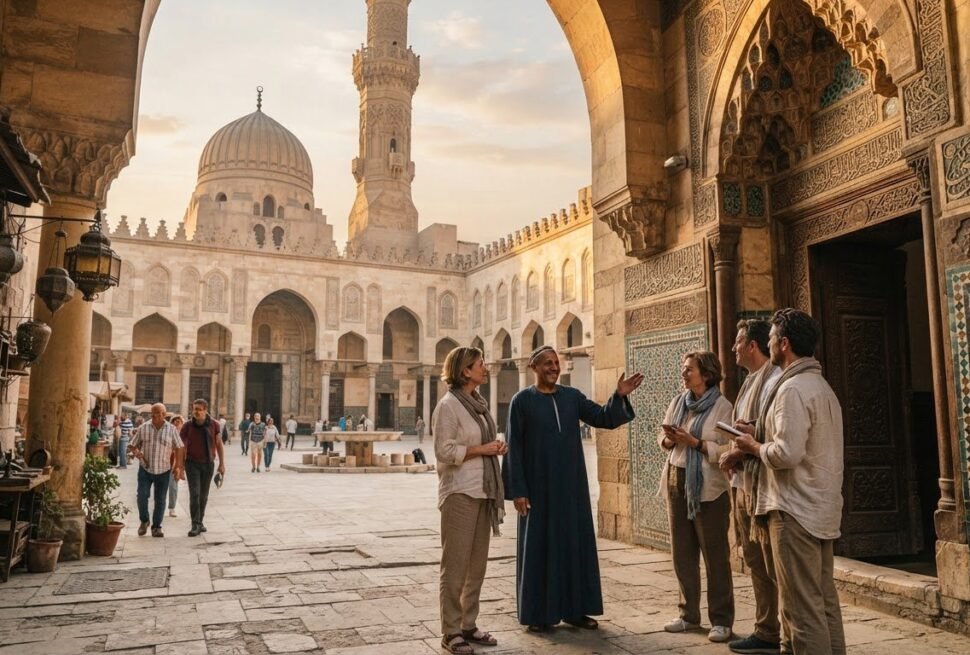
For a journey that begins with the capital’s landmarks, Cairo Highlights and Historic Cairo include visits to the Pyramids, Sphinx, Egyptian Museum, Islamic Cairo, and Khan el-Khalili. These experiences make a natural starting point before you continue beyond the city.
To explore options for your itinerary, visit cairotrips.com.
Let your Egypt journey take its own shape
The most memorable Egypt trips beyond Cairo aren’t defined by how many places you fit in, but by the moments you leave time to absorb. Choose the experiences that matter most, then connect them at a comfortable pace. A quiet stretch on the Nile, a museum visit, or an unhurried evening can be as meaningful as the grand monuments.
Cairo Trips brings that vision together through Egypt Beyond Cairo, Nile Cruises, and Historic Cairo. Whether you’re planning around southern temples or including time in the capital as part of a wider itinerary, let your interests guide the journey.
Explore your Egypt itinerary with Cairo Trips, and take the next step toward a journey that feels distinctly yours.
Frequently Asked Questions
What are the most popular Egypt trips for first-time travelers?
First-time visitors often combine Cairo’s landmarks with Luxor and Aswan, adding a Nile cruise when they want the river to shape the journey. This mix offers city history, temple visits, and changing landscapes. For Egypt trips beyond Cairo, decide whether Alexandria’s coastal character or the Red Sea’s relaxed pace matters more than adding another stop, then build your route around that preference.
What are the best Egypt tours and what do they include?
The best tour is one that fits your interests and preferred pace. Cairo Highlights suits travelers focused on the Pyramids, Sphinx, and Egyptian Museum; Historic Cairo explores Islamic Cairo, Khan el-Khalili, and historic mosques. Nile Cruises combine dinner, music, and food with a river experience. For southern destinations, choose a trip centered on Luxor, Aswan, or the Red Sea.
What are some places you would recommend visiting?
Choose destinations for contrast: Alexandria adds Mediterranean history, while Faiyum offers a change of scenery beyond the capital. Saqqara, Dahshur, and Abusir appeal to travelers curious about pyramid architecture beyond Giza. Farther south, Luxor and Aswan bring monumental temples and Nile landscapes. If you’re drawn to the coast, consider Hurghada. Each option creates a different trip, so prioritize the experiences you most want to remember.
What are the best places to visit in Egypt beyond Cairo?
For ancient monuments, start with Luxor and Aswan, then consider Abu Simbel as a more distant addition. For coastal atmosphere and cultural history, Alexandria offers a distinct alternative. Travelers interested in pyramid sites can explore Saqqara and Dahshur, while Hurghada suits a trip that includes time by the Red Sea. The strongest choice depends on whether you want archaeological sites, a river journey, coastal scenery, or a blend.
What are the best Egypt itineraries beyond Cairo for 7, 10, or 14 days?
For 7 days, focus on Cairo and one southern destination rather than racing through several regions. With 10 days, combine Cairo, Luxor, and Aswan, keeping visits grouped by location. A 14-day plan gives more room to add Alexandria, Abu Simbel, or Hurghada, depending on your interests. Travelers visiting Cairo, Luxor, and Aswan can plan for 10 days to 2 weeks, which allows a more measured pace.
When is the best time to visit Egypt beyond Cairo, and what weather should travelers expect?
Weather in Egypt can vary by season and location, so check conditions for the places and dates on your itinerary. Average lows range from 9.5°C in winter to 23°C in summer, while average highs range from 17°C in winter to 32°C in summer.
What do domestic flights, trains, buses, and Nile cruises cost in Egypt?
Travel costs vary widely depending on comfort levels and booking seasons. Domestic flights typically range from moderate to high, while trains and public buses offer budget-friendly alternatives for getting around. Nile cruises vary based on the duration and luxury tier of the vessel, making it easy to tailor expenses when booking through providers like Cairo Trips.