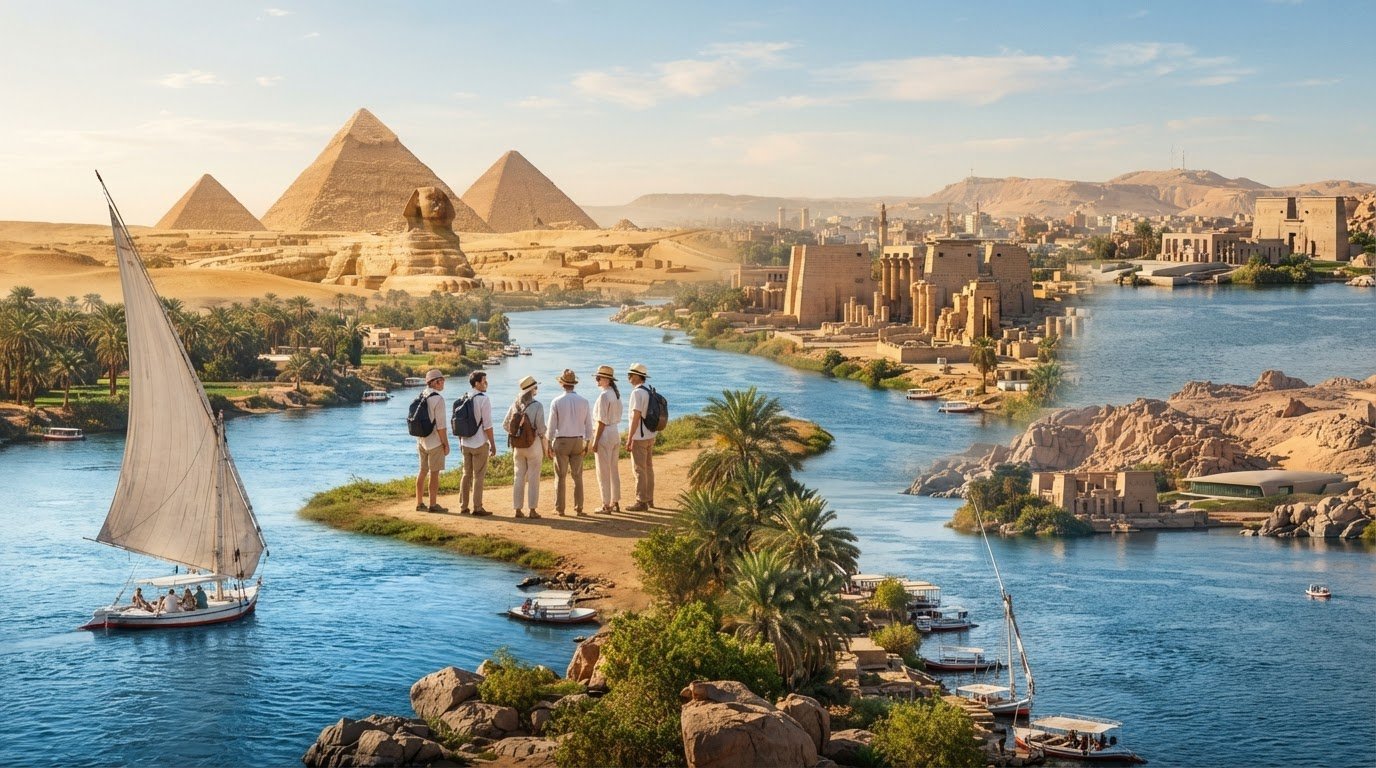
The finest Egypt itinerary doesn’t stop at the pyramids. Egypt sightseeing tours can bring together Cairo and Giza, Luxor, and Aswan, with Abu Simbel as a memorable extension; 7-10 days is a typical trip length for covering major highlights. The Grand Egyptian Museum adds a compelling modern counterpoint to the ancient sites.
It’s natural to want to see the Great Pyramids and Sphinx, but Egypt’s appeal grows as you follow the Nile south. Temples, tombs, and riverside scenes reveal another side of the country. Thoughtful planning helps balance landmark visits with time to take in each place.
Explore destinations and standout sights, from Giza’s monuments and Cairo’s museums to Luxor’s temples, Aswan’s Nile scenery, and Abu Simbel. You’ll also find guidance on shaping a multi-city route and choosing sightseeing experiences, so your days feel connected rather than crowded.
Key Takeaways
- Build your route around the places you most want to experience, then connect Cairo and Giza with southern destinations at a comfortable pace.
- Pair major ancient sites with museum visits to bring Egypt’s history into sharper focus.
- Choose day trips or a multi-city itinerary based on how much time you want to spend in each destination.
- Explore guided experiences that bring together Cairo highlights, historic neighborhoods, and journeys beyond the capital.
Egypt sightseeing and multi-city tour packages
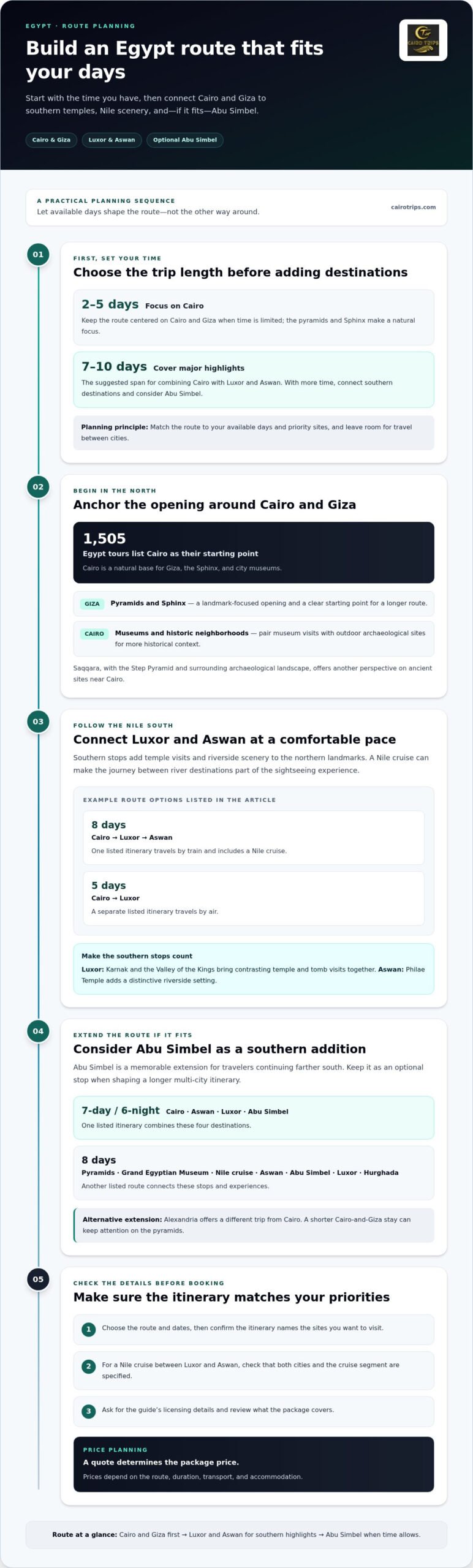
Choose destinations first, then match your itinerary to the distances between them. A well-planned route balances Cairo and Giza’s ancient landmarks with southern temples and Nile scenery.
Popular Destinations and Starting Points
Cairo is listed as the starting point for 1,505 Egypt tours, making it a natural base for Giza, the Sphinx, and city museums. For an especially rewarding route, combine those northern highlights with Luxor, Aswan, and Philae. The Centers for Disease Control and Prevention says most criminal acts are crimes of opportunity, including purse snatching and pickpocketing. Keep valuables secure and hotel doors locked, as the CDC advises.
Tour Durations and Suggested Itineraries
A Cairo itinerary can take 2 to 5 days, while 7 to 10 days is suggested for major highlights such as Cairo, Luxor, and Aswan. With less time, focus on Cairo and Giza; with longer, connect the southern cities and consider Abu Simbel. A Nile cruise can make the journey between river destinations part of the sightseeing experience. The best tour is the one that fits your available days and priority sites.
Package Prices and Starting Prices
Package prices depend on the route, duration, transport, and accommodation; a quote request determines the price. For admission, tipping, and clothing, plan site visits around each destination’s entry arrangements. Restaurant tips of 5 to 10 percent are suggested; small favors may warrant a few Egyptian pounds, but no more than five, and one Egyptian pound is described as appropriate for a bathroom attendant. Choose respectful clothing, especially for mosque visits.
Booking a Licensed Guide or Tour
To book a licensed guide or sightseeing tour, choose the route and dates first, then select a tour whose itinerary names the sites you want to visit. Ask for the guide’s licensing details before booking, and review what the package covers. A focused Cairo day tour to the Giza Pyramids and Sphinx suits travelers staying near the capital; Egypt Beyond Cairo or a Nile Cruises itinerary fits those extending their route south.
Multi-day sightseeing itineraries in Cairo, Luxor, Aswan, Giza, and Abu Simbel
A multi-day route connects Egypt’s northern monuments with temples and river landscapes farther south. Match each stop to your available time, and leave room for travel between cities. The right sequence turns a list of famous sites into a more coherent journey.
Cairo and Giza tours bring the Pyramids and Sphinx together, often as the opening chapter. They suit travelers who want to focus on the capital before continuing south. For a longer adventure, a listed 7-day/6-night itinerary combines Cairo, Aswan, Luxor, and Abu Simbel. Another 8-day route joins the Pyramids, Grand Egyptian Museum, Nile cruise, Aswan, Abu Simbel, Luxor, and Hurghada.
For a closer look at the southern sites, consider how Luxor and Aswan fit into the same itinerary. One listed 8-day Cairo, Luxor, and Aswan route travels by train and includes a Nile cruise. A separate 5-day Cairo-to-Luxor itinerary is listed as traveling by air. In Luxor, Karnak and the Valley of the Kings add contrasting temple and tomb visits; in Aswan, Philae Temple brings the itinerary back to the Nile.
Alexandria offers a different extension from Cairo, while a shorter Cairo and Giza stay keeps attention on the pyramids. For the question “Which Egypt tours include the Pyramids of Giza and the Sphinx?”, choose a Cairo-and-Giza sightseeing itinerary or a multi-city package that names both sites. The best Nile sightseeing cruises between Luxor and Aswan are itineraries that include both cities and specify the cruise segment, so you can see how river travel connects the visits. To explore a route beyond the capital, plan a journey beyond Cairo.
Egyptian museums and ancient sites
Egypt’s museums provide context for its monuments, while temples and tombs bring ancient history to life. Pair a museum visit with nearby archaeological sites to connect objects, architecture, and place.
Temples and Archaeological Sites
At Karnak, monumental columns and open courtyards reveal the scale of ancient Egyptian temple life. In Aswan, Philae Temple offers a distinctive riverside setting, while Abu Simbel is an option for travelers continuing farther south. Choose visits based on location and interest, whether that means temple architecture, carved reliefs, or the stories behind each site. A guide can help bring those details into focus as you explore.
Pyramids and Ancient Egyptian Sites
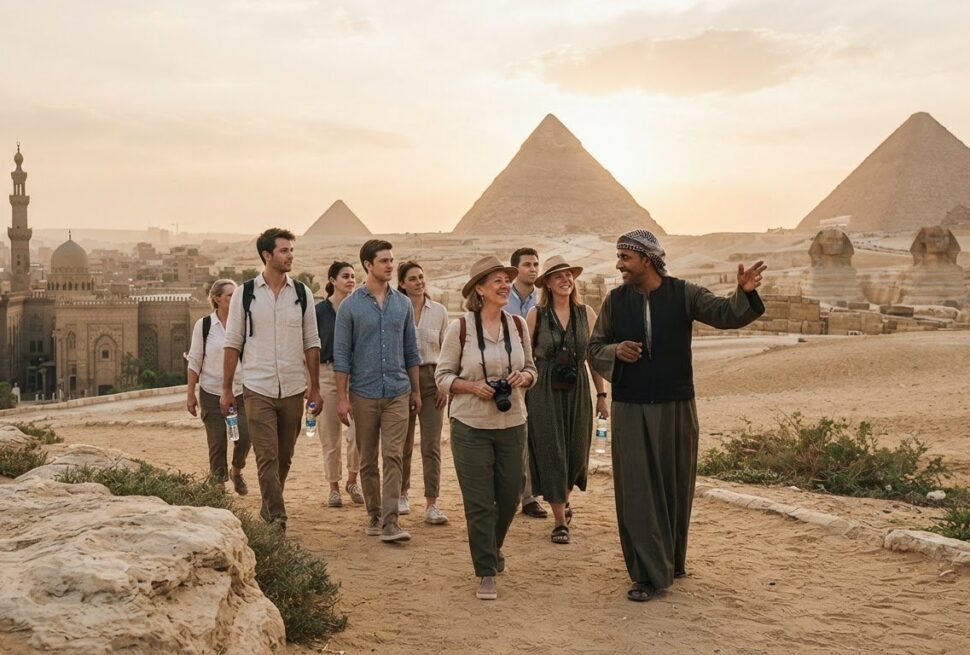
At Giza, the pyramids and Sphinx offer a powerful introduction to ancient Egypt’s royal monuments. Saqqara adds another perspective, with the Step Pyramid and its surrounding archaeological landscape. In Cairo, the Egyptian Museum and the Grand Egyptian Museum complement these outdoor sites with collections that connect artifacts to their historical setting. Pairing a museum with a pyramid visit balances time among monuments, galleries, and the city.
Luxor Temples and Tombs
For Luxor sightseeing focused on temples and tombs, choose a tour that pairs Karnak with the Valley of the Kings. Karnak’s vast temple complex contrasts with tombs cut into the valley’s rocky landscape, giving the day two distinct settings. A guide can explain religious and funerary details that are easy to miss when moving quickly. Make time to take in the carvings and architecture at each stop instead of treating them as a checklist.
The best Luxor tours for temples and tombs link Karnak and the Valley of the Kings, with a guide providing context at both sites. Add Luxor Temple for another perspective on the city’s ancient architecture and history.
Giza pyramids and the Grand Egyptian Museum
The Pyramids of Giza and the Grand Egyptian Museum make a strong pairing: one brings ancient monuments into view, while the other provides museum context. Make them the day’s central experience instead of squeezing in distant destinations such as Alexandria, Luxor, or Aswan.
At Giza, the pyramids and Sphinx are landmarks to experience across the desert landscape. Give the outdoor visit time to breathe, and consider what you want from it: close views of the monuments, a wider perspective across the plateau, or time to take photographs. The Sphinx adds another distinct stop, so choose an itinerary that names it rather than assuming every pyramids visit includes it.
The Grand Egyptian Museum brings a different pace. After time among the monuments, its galleries offer a way to explore objects and stories connected with ancient Egypt. The Egyptian Museum is another Cairo option; decide which museum best complements your priorities, rather than trying to fit both into an already full day. A traveler review describes a Giza and Grand Egyptian Museum excursion from 9:00 a.m. to 5:30 p.m. That span shows how much of a day this pairing can occupy.
Tour formats also vary: one full-day GEM and Pyramids package is described as lasting 8-9 hours. Compare the itinerary details, especially whether both Giza and the museum are included, how the visit is paced, and whether you want a guide to connect the sites’ histories. Keep the day focused, then add another destination on a separate day if your schedule allows. This is a practical way to appreciate two of Egypt’s wonders without turning every stop into a hurried photo opportunity.
For a wider itinerary beyond Cairo, explore Egypt Beyond Cairo trips and consider how southern destinations might follow your Giza and museum visit.
Cairo Trips: Egypt Beyond Cairo
When you’re ready to explore beyond Cairo, Cairo Trips can help shape the next part of your itinerary. Egypt Beyond Cairo includes destinations such as Luxor and Aswan, while Nile Cruises bring river travel into your journey. These experiences follow naturally after time among the pyramids and Cairo’s museums, especially if you want to continue south and discover temples and riverside landscapes.
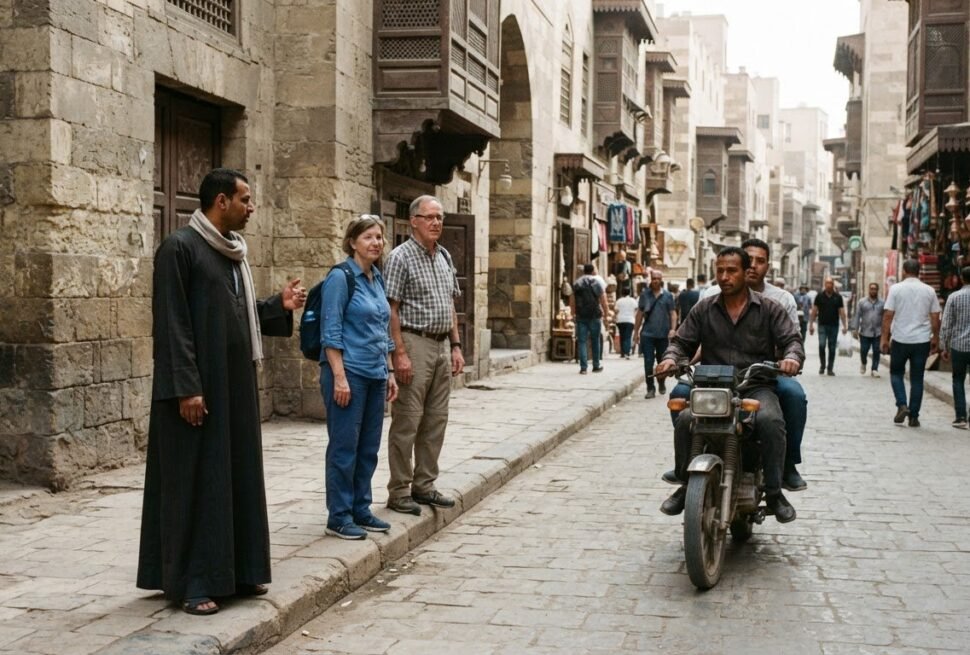
For a focused stay in the capital, Cairo Trips offers Cairo Highlights and Historic Cairo, with visits to the Pyramids, Sphinx, Egyptian Museum, Khan el-Khalili, and historic mosques. Expert local guides bring context and stories to each place. Choose the experience that suits your plans, then contact Cairo Trips to discuss your sightseeing itinerary.
Shape the Journey You’ll Remember
The most rewarding itinerary is not simply the one with the most stops. It leaves room to notice details, follow your curiosity, and let each destination feel distinct. As you plan your Egypt sightseeing tours, consider what you want the journey to feel like: an encounter with Cairo’s layered history, a slower passage along the Nile, or time exploring places beyond the capital.
Cairo Trips offers Historic Cairo, Nile Cruises, and Egypt Beyond Cairo, giving you different ways to shape your journey. Choose the experience that reflects your interests, then bring your preferred destinations and priorities into the planning conversation. A thoughtful route can make the transitions between places feel as meaningful as the landmarks themselves.
Contact Cairo Trips to begin shaping a journey around the places you most want to experience. Your Egyptian story can start with one clear choice, and grow from there.
Frequently Asked Questions
What Are the Finest Destinations to Visit in Egypt?
The best destinations depend on whether you’re drawn to ancient monuments, city life, or coastal scenery. Egypt sightseeing tours often focus on Cairo and Giza, then continue to Luxor and Aswan for temples and Nile views. Consider Abu Simbel for a striking southern excursion, Alexandria for a Mediterranean setting, or the Red Sea for a change of pace after exploring historic sites.
What are the Must be Visited Places in Egypt?
For a first visit, prioritize the Pyramids of Giza, the Sphinx, and a Cairo museum, then choose a southern site that matches your interests. Karnak showcases monumental temple architecture, while the Valley of the Kings focuses on royal tombs. If Nubian history and riverside temples interest you most, include Philae Temple or Abu Simbel rather than trying to fit every landmark into one trip.
How much do Egypt sightseeing tours cost, including private and group tours?
The price depends on whether you choose a private or group itinerary, its length, destinations, transport, and included experiences; the cost is provided after a quote request. A focused visit to Cairo and Giza differs from a multi-city trip with Luxor, Aswan, or a Nile cruise. Compare itineraries by what they include, not just by the number of stops or advertised tour length.
How many days should I spend on an Egypt sightseeing tour?
Plan 7-10 days to experience major highlights such as Cairo, Luxor, and Aswan. With fewer days, concentrate on Cairo and Giza instead of rushing between distant cities. If Abu Simbel or Alexandria matters to you, allow extra time for that extension. Build your schedule around travel between destinations, and leave space to enjoy each site rather than treating every visit as a quick stop.
What is the best time of year for sightseeing in Egypt?
September through April is recommended for sightseeing in Egypt. For a seasonal reference, winter daytime temperatures from December through February are described as 18-25°C (64-77°F), while autumn temperatures from September through November are 25-30°C (77-86°F). Choose your travel period with the day’s outdoor visits in mind, especially if your plans include extended time among open-air sites such as Giza or Karnak.


[…] multi-day route can bring together Cairo’s collections and southern Egypt’s temples. Begin with the Egyptian Museum in Cairo, then travel to Luxor for Karnak and the Valley of the […]