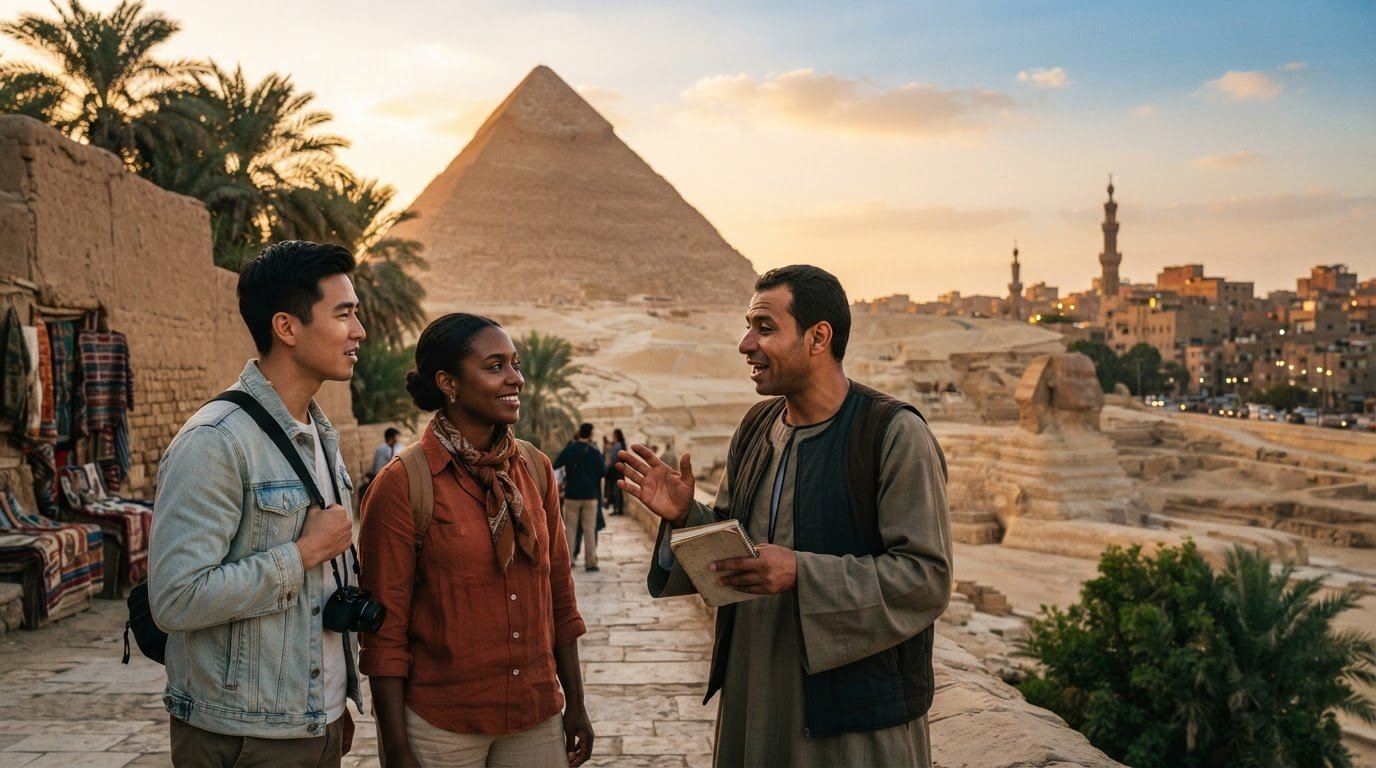
Three to four days are enough to experience Cairo’s cuisine, monuments, and social scene. A Cairo cultural tour with a local guide can make those days feel more connected, whether you’re exploring historic neighborhoods or standing before the Giza Pyramids and Great Sphinx.
It’s natural to want to see ancient landmarks while making room for the stories, streets, and everyday rhythms that give Cairo its character. The right guide can add context at each stop and shape the visit around what interests you most.
Here, you’ll find practical ways to choose a guide, understand Cairo’s cultural layers, and plan guided visits to Giza. You’ll also see how tour length and itinerary affect your time, helping you choose a pace that leaves room for discovery as well as sightseeing.
Key Takeaways
- Choose a tour by the experience you want, from historic neighborhoods to a focused visit to the Giza Pyramids and Great Sphinx.
- Compare itineraries and tour lengths to find a pace that leaves room to take in each place.
- Look for a guide whose local knowledge and language skills suit your interests and help bring Cairo’s history into focus.
- Use tour descriptions and traveler feedback to understand what a guided visit includes before settling on a route.
- Explore Cairo’s cultural layers through its mosques, churches, museums, markets, and historic streets.
What are the best tours in Cairo?
The right choice depends on whether you’re interested in historic neighborhoods, museum collections, or a focused visit to Giza. Compare the route, duration, group format, and what the quoted price includes.
Tour Durations and Group Sizes
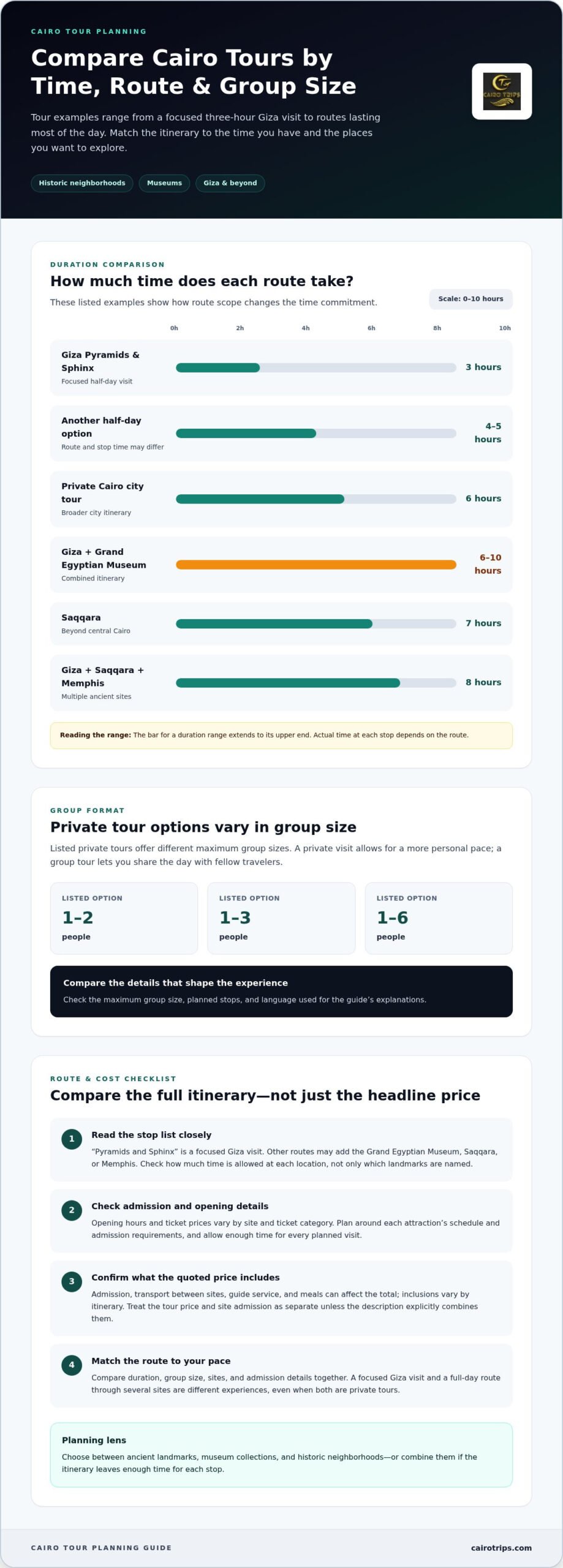
Tour lengths range from a focused visit to a full day. A listed half-day tour of the Giza Pyramids and Great Sphinx lasts three hours, while another half-day option takes four to five hours. The difference may reflect the route and time at each stop. A broader private Cairo city tour lasts six hours, while an itinerary combining Giza with the Grand Egyptian Museum can take six to ten hours.
Saqqara requires more time beyond central Cairo. A listed tour there lasts seven hours, while a route combining Giza, Saqqara, and Memphis takes eight hours. Use these examples to judge whether an itinerary fits your day without rushing between sites.
Group format also shapes the experience. Listed private tours offer options for one to two people, one to three people, or one to six people. A private visit allows for a more personal pace, while a group tour lets you share the day with fellow travelers. Before choosing, compare the maximum group size, planned stops, and language used for the guide’s explanations.
Price depends on the route, duration, group format, and what the tour includes, such as admissions or other items. Compare the same details across itineraries instead of judging by the headline price alone. A Giza-only visit and a full-day route through several sites are different experiences, even if both are described as private tours.
Itineraries and Site Admission Details
Opening hours and ticket prices vary by site and ticket category. Build your itinerary around each attraction’s schedule and admission requirements, and allow enough time for every planned visit.
Read the stop list closely. “Pyramids and Sphinx” describes a focused visit to Giza, while a combined itinerary may add the Grand Egyptian Museum, Saqqara, or Memphis. A six-hour Giza and museum tour covers different ground from an eight-hour route through Giza, Saqqara, and Memphis. Check how much time the itinerary allows at each location, not just which landmarks it names.
Clarify what the stated price includes. Admission, transport between sites, guide service, and meals can affect the total, and inclusions vary by itinerary. Treat the tour price and site admission as separate items unless the description explicitly combines them. This makes comparisons clearer and helps avoid unexpected entry costs disrupting your day.
For a cultural visit, choose a route that matches your interests and available time. A Cairo cultural tour with a local guide might focus on Giza’s monuments or balance them with the Egyptian Museum and historic districts. Compare duration, group size, sites, and admission details together to see whether the tour offers the depth and pace you want.
Cairo’s history and cultural influences
Cairo’s history is visible in its streets, religious landmarks, and varied architectural styles. A guided visit can connect these places to the cultural influences that shaped the city.
Cairo’s Historical Background
Egypt’s capital carries layers of history, not a single story. Cairo’s name can offer visitors a way to think about the city’s place in the wider national imagination. This context helps visitors see monuments not as isolated stops, but as part of a living city.
During the 19th century, Mohammed Ali ended feudalism in Egypt and welcomed European architectural and cultural influence. That period offers one way to understand why Cairo’s built environment can feel varied from one street to the next. As you walk, notice the contrast between historic religious buildings and later architectural styles. A guide can explain how these visible layers relate to the city’s changing cultural life.
Ask how the itinerary brings different influences together. A route focused only on ancient history tells a different story from one that also visits historic neighborhoods and religious sites. Memphis and Saqqara, for example, connect a visit to ancient sites beyond Cairo’s central streets, while Old Cairo offers another perspective on the capital’s cultural landscape.
Islamic Cairo and Historic Mosques
Explore Islamic Cairo through its architecture and the stories attached to particular places. Sultan Hassan Mosque and Al-Rifa’i Mosque are distinct landmarks to consider on a guided walk. Ibn Tulun Mosque and Gayer-Anderson Museum add further stops, extending the route beyond a single building or viewpoint.
Check which sites the itinerary names and how much time it allows for each. A visit covering Sultan Hassan, Al-Rifa’i, Ibn Tulun, and Gayer-Anderson brings several places together in one experience. A guide can point out details you might otherwise miss and explain how mosques and surrounding streets shape the historic district.
Historic Cairo offers cultural experiences beyond viewing monuments. At Khan el-Khalili, the market adds a lively street experience to a day focused on architecture. Pairing a mosque visit with time in the surrounding area gives you a fuller sense of how heritage and everyday life meet.
Cultural Sites on Guided Tours
Cairo’s cultural routes can bring together Islamic, Coptic, and ancient sites. The Hanging Church, Ben Ezra Synagogue, and Saints Sergius and Bacchus Church introduce visitors to religious landmarks in Old Cairo. An itinerary that also includes the Citadel of Saladin and the Alabaster Mosque shifts the focus to other historic architecture.
Museums offer another perspective. The Egyptian Museum and the Grand Egyptian Museum present Egyptian history through their collections, while Giza’s Pyramids and Great Sphinx connect a cultural visit with ancient monuments. Each combination makes for a different day, so choose sites based on the story you want to follow.
Before setting out, identify the places that matter most to you, then choose a route that links them thoughtfully. If you’d like to explore an itinerary centered on the city’s historic sites, consider this historic Cairo route as a starting point for planning.
Choosing a guide based on local knowledge and language skills
A guide’s value lies in how clearly they connect places, people, and history. Whether you’re visiting a museum, walking through Khan el-Khalili, or traveling beyond Cairo, match the guide’s knowledge and language skills to your interests.
Start with the route. A guide discussing Dahshur should be able to explain how its monuments differ from those at Giza; a visit to Alexandria calls for knowledge of that city’s history and landmarks. Ask what the guide will explain at each stop, not just which places appear in the itinerary. Specific answers about architecture, daily life, or historical context show whether their knowledge fits your plans.
Experience can help you compare profiles, but years alone don’t show how a guide communicates. Profiles in the market cite experience ranging from four years organizing excursions to more than 22 years guiding visitors. Treat those figures as context, then look for examples of the sites and subjects each person knows. A guide’s detailed explanation of one monument may tell you more about their approach than a broad claim of expertise.
Language matters throughout the day, from understanding historical explanations to asking questions in a busy bazaar. If you want an English-language tour, look for a clear statement of the language used by the guide. Read sample explanations or reviews to see whether the guide speaks plainly, answers follow-up questions, and explains unfamiliar terms. A shared language should make conversation easier, not limit it to rehearsed facts.
Consider the kind of visit you enjoy. One traveler may want a focused conversation at a museum; another may prefer an unhurried walk through Khan el-Khalili, with time to take in the street’s details. Tell the guide which subjects interest you, such as ancient history, religious architecture, or local traditions. Their response can help you decide whether the experience suits your curiosity and pace.
Before choosing, compare each guide using the same practical questions:
- Which named sites and historical periods do they know best?
- What language will they use for explanations and questions?
- How do they balance landmark visits with time for discussion?
- Can they describe a specific story or detail they share at a museum or bazaar?
These answers help distinguish a simple escort from a thoughtful cultural companion. For an outing to Dahshur or Alexandria, check that the guide’s stated interests match the route. For a city walk, ask how they bring Khan el-Khalili’s setting to life. Choose someone whose knowledge and communication style make the places meaningful to you.
Finding guides through travel platforms, tour companies, and social media
Travel platforms make it easy to compare Cairo itineraries side by side. One search page lists 305 private Cairo tour results, ranging from neighborhood walks to visits around the Pyramids of Giza. Treat that volume as a starting point, then narrow your choices by route, guide language, and the stories you want to hear. A fascinating description should explain more than a list of landmarks.
Read each itinerary as a practical plan. For a private tour, look for named stops, the order of visits, and the time allowed at each place. A route combining the Pyramids of Giza and the Grand Egyptian Museum differs from one focused on Old Cairo. Compare the stated duration and group format too, so the experience fits your pace.
Reviews can reveal how a guide makes a visit feel. Look for specific examples: did the reviewer mention a clear explanation at a museum, thoughtful answers, or a route adapted to their interests? A traveler described hiring Sherine as a private guide in Cairo for two days in November 2023. The useful detail is the format and duration, not a promise that every visit will be identical.
Tour companies can simplify planning by showing the itinerary in one place. Compare what each description says about guiding, transport between stops, and site admissions. For example, check whether the Grand Egyptian Museum is a planned visit or an optional addition. Clear details help you understand the experience before committing your time in Cairo.
Social media posts about Khan el-Khalili or Giza can give you a sense of a guide’s storytelling style. Treat an appealing photo as an introduction, not a substitute for itinerary details. Look for posts that explain a site’s context, then compare those themes with the tour description. A brief conversation about your interests can also show whether the guide communicates clearly.
Use the same comparison steps across platforms, company pages, and social profiles:
- Match named sites to your priorities, such as the Pyramids of Giza, a museum, or historic Cairo.
- Compare duration and private or shared format using the itinerary details.
- Read reviews for concrete stories about communication, pacing, and guide knowledge.
- Check how the description handles admission, transport, and optional stops.
Finally, save the strongest two or three options and compare them line by line. A day focused on ancient monuments calls for a different pace from a market walk or museum visit. Choose the guide whose route, explanations, and practical details best suit the experience you want.
What cultural sites are included in Cairo tours with a local guide?
Cairo tours can bring together ancient monuments, museums, religious landmarks, and lively markets. The sites depend on whether you want a focused outing to Giza or a wider cultural route through the city.
Ancient Monuments and Museums
At Giza, the Pyramids and Great Sphinx bring ancient history into view in one outing. Some itineraries pair them with the Grand Egyptian Museum, connecting monumental architecture with museum collections. Check the stop list carefully: a tour that names both Giza and the museum covers more than one dedicated to the plateau alone.
For a broader view of ancient sites, itineraries may extend to Saqqara and Memphis. These stops let travelers compare several archaeological settings instead of concentrating on one landmark. A day combining Giza, Saqqara, and Memphis covers different ground from a museum-focused visit. Choose based on whether you prefer monuments, collections, or a mix.
The Egyptian Museum is another cultural stop named in Cairo tour descriptions. A visit can complement time outdoors at Giza or anchor a day focused on historic city sites. Before choosing, check which museum the itinerary names and how it fits with the other stops. This simple step helps ensure the route matches your expectations.
Historic Neighborhoods and Religious Sites
Old Cairo routes can include the Hanging Church, Ben Ezra Synagogue, and Saints Sergius and Bacchus Church. Together, these sites introduce visitors to religious architecture in one historic district. Some itineraries also include the Citadel of Saladin and the Alabaster Mosque for a broader architectural walk. Compare the named stops to see whether the route focuses on Old Cairo or covers several areas.
Islamic Cairo itineraries may feature Sultan Hassan and Al-Rifa’i mosques, Ibn Tulun Mosque, and Gayer-Anderson. These sites give a guided visit a clear architectural focus. A route through historic mosques differs from one centered on Coptic landmarks, so identify the places that matter most to you before choosing. The named stops are the clearest indication of a tour’s cultural focus.
Markets and the Nile
Khan el-Khalili brings a market setting to a day of monuments and museums. The Nile River is another notable attraction, offering a different way to experience Cairo’s landscape. Consider whether you want a route focused on architecture, museum collections, or public spaces. That choice helps give your visit a clear theme.
To shape your Cairo visit around its monuments and historic districts, explore Cairo’s cultural tour options.
Cairo Trips: Egypt Beyond Cairo
Cairo Trips can help turn your interest in local history into a thoughtfully planned visit. Choose Cairo Highlights for visits to the Pyramids, Sphinx, and Egyptian Museum, or Historic Cairo to explore Islamic Cairo, Khan el-Khalili, and historic mosques. If you plan to travel beyond the capital, Egypt Beyond Cairo includes trips to Luxor, Aswan, and the Red Sea. Nile Cruises offer another way to experience the country, with dinner, music, and food onboard.
Choose these experiences when you’re ready to shape your sightseeing around particular landmarks, historic districts, or destinations beyond Cairo. Each offers a different way to deepen your time in Egypt, whether you’re starting with the city’s monuments or continuing your journey along the Nile.
Contact Cairo Trips to discuss the experience that best suits your plans.
Let curiosity shape your next steps
Let one question guide your plans: what would you most like to understand about Cairo? It might be how a neighborhood’s architecture reflects its past, how a museum tells a story through its collections, or how the city’s ancient landmarks fit into present-day life. Naming that interest gives your visit a personal direction and helps you decide where to spend your time.
A Cairo cultural tour with a local guide can turn your curiosity into a more considered experience, with room to notice details you might otherwise miss. You don’t need to see everything in one visit. Start with the places that speak to you, then leave room for a story or discovery to change your plans.
Cairo Trips offers Historic Cairo, Nile Cruises, and Egypt Beyond Cairo for travelers shaping a wider journey. If you’re ready to plan your next chapter in Egypt, explore your options with Cairo Trips. Let your interests lead, and give the city room to surprise you.
Frequently Asked Questions
How many days are enough for Cairo?
Three to four days give you time to experience Cairo’s cuisine, monuments, and social scene. Use one day for Giza, another for a museum or historic neighborhood, and leave room to explore at a slower pace. If you have less time, choose a priority rather than trying to fit every landmark into one itinerary. Travelers continuing to Luxor or Aswan can plan those destinations separately.
What are the best attractions in Cairo?
Top attractions include the Giza Pyramids, the Great Sphinx, the Egyptian Museum, the Nile River, and Khan el-Khalili. To make your choices manageable, group places by the experience you want: ancient monuments, museum collections, market streets, or time beside the river. For example, pair a visit to Giza with a museum if ancient history is your focus, or set aside time for Khan el-Khalili’s distinctive market atmosphere.
What should I be careful of in Cairo?
In busy places such as Khan el-Khalili, keep personal belongings close and agree on a clear meeting point in case your group separates. At major landmarks, follow posted site instructions and stay with your planned route. Cairo’s streets can be lively, so take care when crossing and allow time to travel between stops. Carry water and dress comfortably for walking, especially on days that include outdoor sites such as Giza.
How much does a guided cultural tour in Cairo cost?
Price depends on the itinerary, duration, group format, and included services, such as admissions or transport between sites. A short neighborhood walk and a private day covering several attractions require different planning. For a Cairo Trips tour, the price depends on the itinerary and is provided after a quote request. Compare what each option includes to understand its scope before making plans.
What are the best-rated local guides and tour operators in Cairo?
There isn’t one guide who is best for every traveler; the right choice depends on your interests and preferred pace. Read reviews for specific examples of clear explanations, thoughtful answers, and well-managed visits, rather than relying only on star ratings. Then compare the guide’s experience with your intended route, whether it focuses on museums, historic architecture, or Giza’s monuments.
Are Cairo cultural tours available in English?
English-language guided tours are available in Cairo. Before choosing an itinerary, make sure its description clearly identifies English as the language used for the guide’s explanations. This matters especially if you want to ask questions about a museum object, an architectural detail, or a local custom. If your group has different language needs, agree on a preferred language before choosing a tour.
How long do Cairo cultural tours typically last?
Tour durations vary according to the number and distance of the stops. A focused visit to Giza may take three hours, while a private Cairo city tour can last six hours. Listed itineraries combining Giza with the Grand Egyptian Museum range from six to ten hours. Check that the schedule includes the sites you want, and choose a duration that leaves enough time at each stop.
Do Cairo cultural tours include hotel pickup, transport, or meals?
Inclusions vary by itinerary, so look for clear details about local transport, meals, and site admissions before choosing. Hotel pickup and airport transfers are separate from the cultural experiences described here, so arrange those independently. A Nile Cruise is a distinct option that includes dinner, music, and food. Reading the itinerary carefully helps distinguish a guided sightseeing route from a cruise experience.
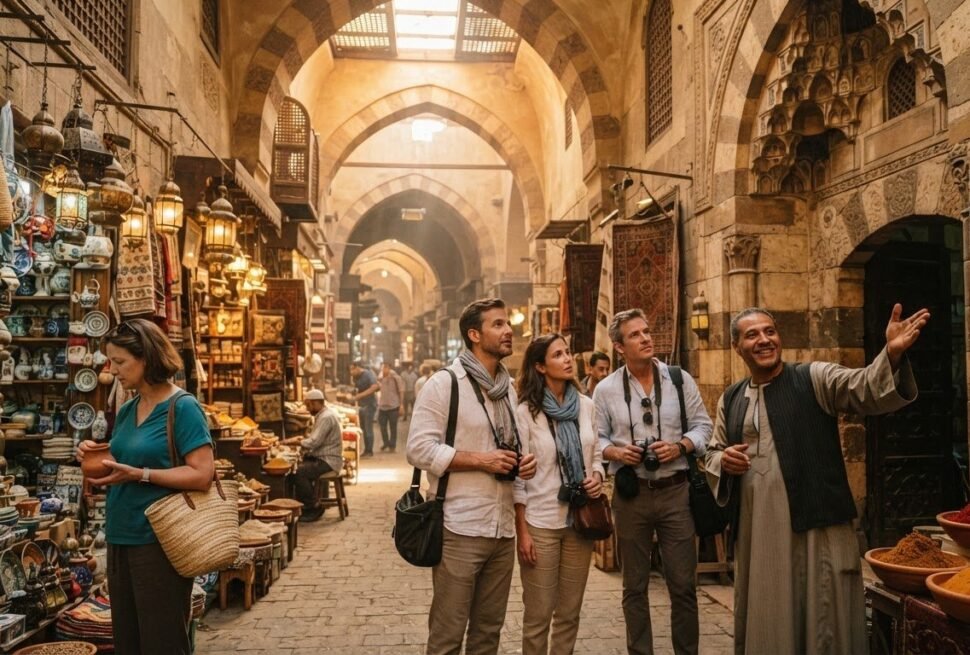


[…] Cairo cultural tour with a local guide suits visitors who want to understand the market in the context of Cairo’s wider story. A guide […]