If you’re wondering how much a 10 day trip to Egypt costs, the biggest difference is often the kind of lodging, sightseeing, and transportation you choose.
It’s natural to focus on the headline trip price, but the details shape what your days are like, from a simple guesthouse and local meals to guided visits, a Nile cruise, or flights between destinations.
This guide explains how your budget, accommodation, guided sightseeing, and domestic travel affect the total, and which personal expenses may fall outside a package price. With these costs in view, you can plan a trip that balances the places you most want to see with the comfort and pace that suit you.
Key Takeaways
- Compare Egypt tour packages by itinerary and trip length to see how the destinations included shape the total.
- Build a practical daily budget by weighing accommodation, meals, local transport, and the pace of sightseeing.
- Consider how guided visits and Nile cruise styles can change both your comfort and the character of your trip.
- Separate international airfare from on-the-ground costs, then account for personal spending that packages may leave out.
- Choose between domestic flights and overland travel based on your route, available time, and preferred pace.
1. How Much Would A Trip to Egypt Cost?
These estimates exclude international flights.
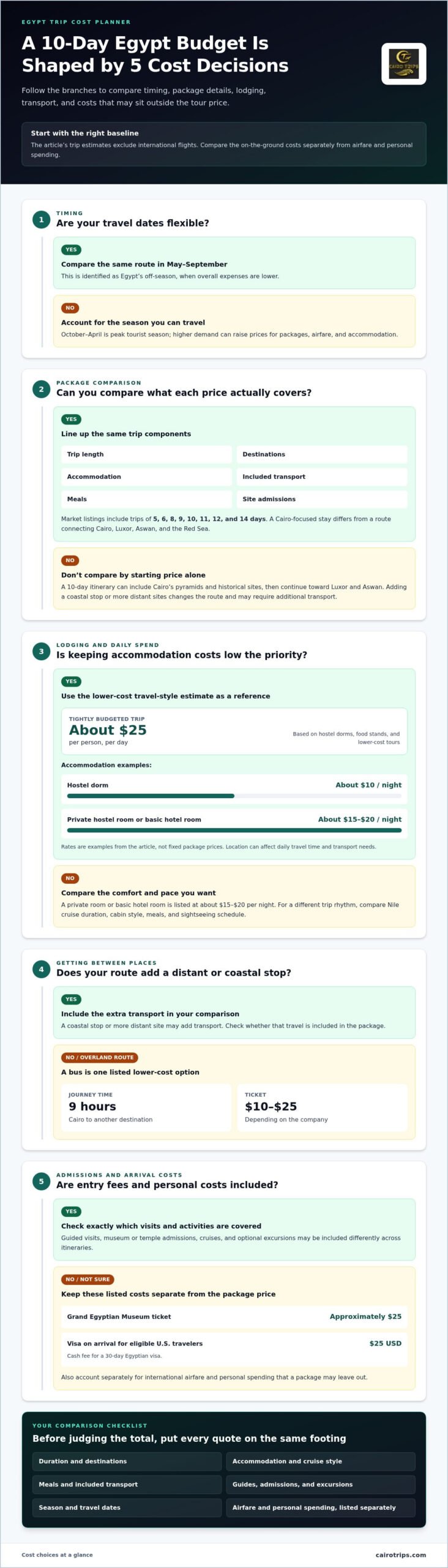
So, how much a 10-day trip to Egypt costs depends on the balance of accommodation, meals, sightseeing, and transport. A tour package may bundle several of these pieces, but itineraries differ in included destinations and experiences. Compare what each package covers, not only its starting price. A Cairo-focused stay and a route linking Cairo, Luxor, Aswan, and the Red Sea create different travel days and costs.
Tour lengths also shape the price. Market listings include trips of 5, 6, 8, 9, 10, 11, 12, and 14 days, with itineraries ranging from Cairo and a Nile cruise to broader routes across Upper Egypt. A 10-day itinerary can allow time for Cairo’s pyramids and historical sites, then continue south toward Luxor and Aswan. Adding a coastal stop or more distant sites changes the route and may require additional transport.
Season matters, too. May through September is identified as Egypt’s off-season, when overall expenses are lower. October through April is peak tourist season, and higher demand can raise prices. If your dates are flexible, compare the same route across these seasons. Travel dates can affect package costs, airfare, and accommodation.
Optional admissions and excursions can add to the trip total. The Grand Egyptian Museum ticket is approximately $25. These costs are distinct from a tour’s listed price, so review which entries and activities are included before booking. A site visit, a cruise, and an optional excursion may each affect the day’s budget differently.
For a clear comparison, write down the package duration, destinations, accommodation, included transport, meals, and site admissions. Add airfare and personal spending separately. This makes a ten-day tour easier to compare with independently arranged travel and shows which experiences account for the difference.
2. Budget travel in Cairo, Luxor, Aswan, and other destinations
A one-week Egypt trip budget varies with accommodation, meals, transport, and sightseeing. These are different travel styles, not fixed package prices, and your departure point affects the final total when airfare is included.
Daily spending offers another useful comparison. A tightly budgeted trip can cost about $25 per person per day, using hostel dorms, food stands, and lower-cost tours. Across seven days, those daily estimates help explain why comfort choices can widen the overall range.
Other seven-day estimates use broader totals. The differences reflect varying assumptions about airfare, accommodation, and activities, so compare what each estimate includes before setting your budget.
In Cairo, Luxor, and Aswan, travelers can control costs by choosing local meals and using less expensive transport between destinations. A nine-hour bus journey between Cairo and another destination costs about $10-$25 per ticket, depending on the company.
For U.S. travelers eligible for a visa on arrival, the listed fee is $25 USD in cash for a 30-day Egyptian visa. Keep this separate from the daily budget, alongside entry fees and personal spending, so arrival costs don’t blur your estimate for meals or lodging.
Season and timing can affect both your budget and itinerary. May through September is identified as Egypt’s off-season, when overall expenses are lower. October through April is peak tourist season, when increased demand can mean higher prices. If your departure dates are flexible, compare seasonal prices and consider how crowds may affect the pace of your visits.
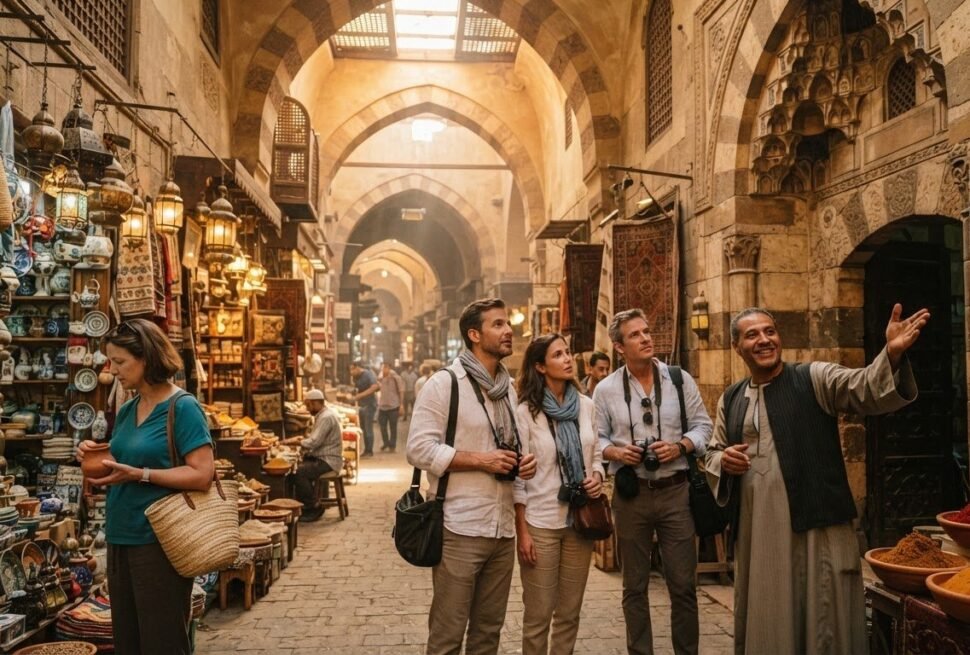
For a Cairo day focused on architecture and market lanes, explore Historic Cairo’s mosques and Khan el-Khalili as part of your itinerary. Choosing a focused visit can help you reserve more of your budget for the destinations and experiences that matter most to you.
3. Guided sightseeing and accommodation styles
In Cairo, Luxor, and Aswan, your choice of accommodation can change the feel and cost of each day. These ranges help distinguish a practical overnight base from a more comfortable hotel stay.
Room type matters as much as the property category. A hostel dorm can be budgeted at about $10 per night, while a private hostel room or basic hotel room costs about $15-$20. For a 10-day itinerary, compare the nightly rate with the location: staying near the sights may reduce daily travel time, while a lower rate farther away can add transport and planning.
For a different pace, a Nile cruise combines time on the river with stops at historical sites. Standard three- or four-night cruises and upscale sailings offer different accommodation styles, while a luxury cruise may last four or five nights. Before choosing, compare the sailing duration, cabin style, meal arrangements, and sightseeing schedule. A cruise shapes several days of your itinerary, so choose a pace that leaves you the time ashore you want.
Guides can add context to visits that might otherwise feel like a series of monuments. At the Pyramids of Giza, a guide can help orient you around the complex; in Luxor, guided sightseeing can connect temple architecture with the wider historical landscape. The cost of guided experiences varies by duration and format, so match the tour style to the sites you want to explore.
Site admissions are another distinct part of your sightseeing budget. A day combining a museum visit with a major temple, for example, may involve separate admission costs. Check your planned stops against the itinerary, especially when site entry is listed separately from the package price.
To compare accommodation and guided experiences, list where you’ll stay each night, then mark the days involving a guide, museum, or cruise. This breakdown shows whether a lower hotel rate comes with more transport costs, or whether a bundled itinerary better suits your preferred pace. In Cairo, Luxor, and Aswan, the right mix of hotels, river time, and guided visits can make the journey manageable and memorable.
4. International airfare and personal expenses excluded
A package total may not cover every cost of visiting Egypt. Check whether international airfare, local transport, site admissions, meals, and personal spending are included. On a route through Alexandria, Luxor, and Aswan, each excluded item can affect the final budget differently. Separate the advertised trip cost from expenses paid independently, then estimate each category against your itinerary.
This is separate from on-the-ground estimates, so include it when calculating your full journey budget. Your departure city, travel dates, and booking timing affect airfare; the next section covers international and domestic flight costs in more detail. Keep the flight total separate from accommodation and daily spending.
Local and intercity transport also need their own allowance. Your route matters: traveling between Cairo, Luxor, and Aswan creates different transport needs from a stay based in one city. An itinerary that extends to Abu Simbel adds another leg to plan, so map each transfer before setting aside your travel funds.
Compare each mode across your planned route rather than assuming every intercity journey costs the same.
Personal spending can include mobile service, souvenirs, and optional activities. Over a 10-day visit, that daily charge can become a substantial separate line in your budget. Travelers who use roaming should include it apart from package costs, meals, and transportation.
Tipping is another personal expense to plan for. Restaurant tipping is recommended at 10-15% of the bill when a service charge isn’t included. The guide recommends $5-$10 per day for Egyptian tour guides and drivers. These are separate from ordinary purchases, so keep a small daily allowance for gratuities rather than treating them as part of admission or transport.
Before booking, make a simple expense list: international flights, local transport, roaming, tips, and personal purchases. Match it to your itinerary, including your days in Cairo and any longer journeys to Luxor, Aswan, or Abu Simbel. This makes excluded expenses visible and helps you compare trip totals on a like-for-like basis.
5. International flights and internal flights
Keep airfare separate from the tour package price, then combine the figures to see your full trip cost.
Booking flights 4-6 months in advance is recommended for the best rates. That timing gives you room to compare departure dates and choose flights that work with your planned itinerary. The season also affects demand: Egypt’s peak tourist season runs from October through April, when prices are higher. Flexible travel dates can help you compare options across seasons.
Domestic flights can be useful when your itinerary spans distant destinations. For example, flying between Cairo, Luxor, and Aswan may save travel time, while a slower overland journey can suit travelers who want to see more between stops.
Treat these as route-specific estimates, not a total for every domestic flight in Egypt. Count the flight legs your itinerary requires, then add them to your international airfare rather than combining both into one figure.
Match flights to the places you want to visit. A Cairo stay focused on the pyramids differs from a journey that also includes Luxor’s temples and the Valley of the Kings. If your plan includes Aswan or Abu Simbel, consider where a domestic flight fits the route and whether it saves enough time for the experiences you value. A tour package may include some travel between destinations, so compare its itinerary with your own flight plan.
Before booking, make a simple route list: your U.S. departure, arrival in Egypt, domestic flight destinations, and return flight. Then note which transport costs your package includes and which you’ll pay separately. This helps prevent the cost of an international ticket from obscuring the expense of reaching each destination once you arrive.
If your journey extends beyond Cairo, plan an Egypt Beyond Cairo itinerary around destinations such as Luxor and Aswan, then align your domestic travel with the places you most want to experience.
Cairo Trips: Egypt Beyond Cairo
Cairo Trips helps travelers turn a cost outline into a meaningful route through Egypt, with thoughtful planning and expert local guides. If your budget allows time beyond the capital, Egypt Beyond Cairo brings Luxor, Aswan, and the Red Sea into view. For time on the river, Nile Cruises offer another way to experience Egypt. In Cairo, Cairo Highlights and Historic Cairo bring the Pyramids, Egyptian Museum, Islamic Cairo, Khan el-Khalili, and historic mosques into focus. Choose experiences that match your interests and itinerary, alongside independently arranged flights and accommodation.
To plan the sightseeing portion of your journey, visit cairotrips.com.
Shape Your Egypt Journey Around What Matters Most
Once you have a clearer sense of how much a 10-day trip to Egypt costs, choose the experiences you want to make central. Perhaps you imagine quiet time along the Nile, a closer look at Cairo’s historic lanes, or a journey that continues beyond the capital. Let those priorities guide your itinerary, then give each destination enough room to feel vivid rather than rushed.
Cairo Trips can help bring your plan into focus through Egypt Beyond Cairo, Nile Cruises, and Historic Cairo. Start with the places and experiences that interest you, then consider how guided sightseeing can connect them into a smooth, memorable journey. Your flights and accommodation remain part of your own travel planning, while the experiences you choose shape your time exploring.
When you’re ready to turn your ideas into a considered itinerary, contact Cairo Trips to plan your Egypt trip. A thoughtful next step can make the journey feel more personal from the very beginning.
Frequently Asked Questions
How Much Would A Trip to Egypt Cost?
A package price can vary with the route, accommodation, included sightseeing, and transport. To compare offers fairly, note whether admissions, meals, domestic flights, and cruise nights are included in the stated total.
1- Flights – How Much Will You Pay to Fly to Egypt?
Departure city, dates, and booking timing influence the fare, so compare the same travel window before setting your total budget. For a 10-day trip, keep the international ticket separate from any domestic flights within Egypt. The recommended booking window for Egypt flights is 4-6 months ahead.
What is the average daily cost of hotels in Egypt for budget, mid-range, and luxury travelers?
These ranges describe different comfort levels, from simpler rooms to upscale properties. For a 10-night stay, multiply the nightly rate by the nights booked, then compare locations as well as room categories. A lower nightly price may mean a longer journey to planned sights.
How much should I budget for food and drinks in Egypt per day?
For food, travelers can spend as little as $5 per day by cooking simple meals or eating at street carts and local restaurants. Restaurant choices and included hotel or cruise meals affect what you spend. Keep drinks separate in your daily plan, since choices and settings vary.
How much do Egypt tours, guides, and attractions cost, including the Pyramids and Egyptian Museum?
General Giza Pyramid Complex entry is listed at $15, and the Grand Egyptian Museum ticket at approximately $25. Check your itinerary for optional admissions before estimating sightseeing expenses.
How much do transportation costs in Egypt add up to for a 10-day trip?
List each planned transfer to build a route-based estimate.
How much should I budget for tipping and other extra expenses in Egypt?
For tips, Cairo Trips recommends $5-$10 per day for Egyptian tour guides and drivers. Restaurant tipping is recommended at 10-15% when a service charge isn’t included. Keep tips, roaming, souvenirs, and optional activities in separate budget lines to avoid overlooking personal expenses.
What is a realistic 10-day Egypt itinerary and its estimated total cost?
A practical route could begin in Cairo with visits to the Pyramids and museum, then continue to Luxor and Aswan for temples and Nile-side sightseeing. When booking through Cairo Trips, travelers can expect comprehensive packages that cover these major highlights along with transparent pricing for a complete 10-day experience.