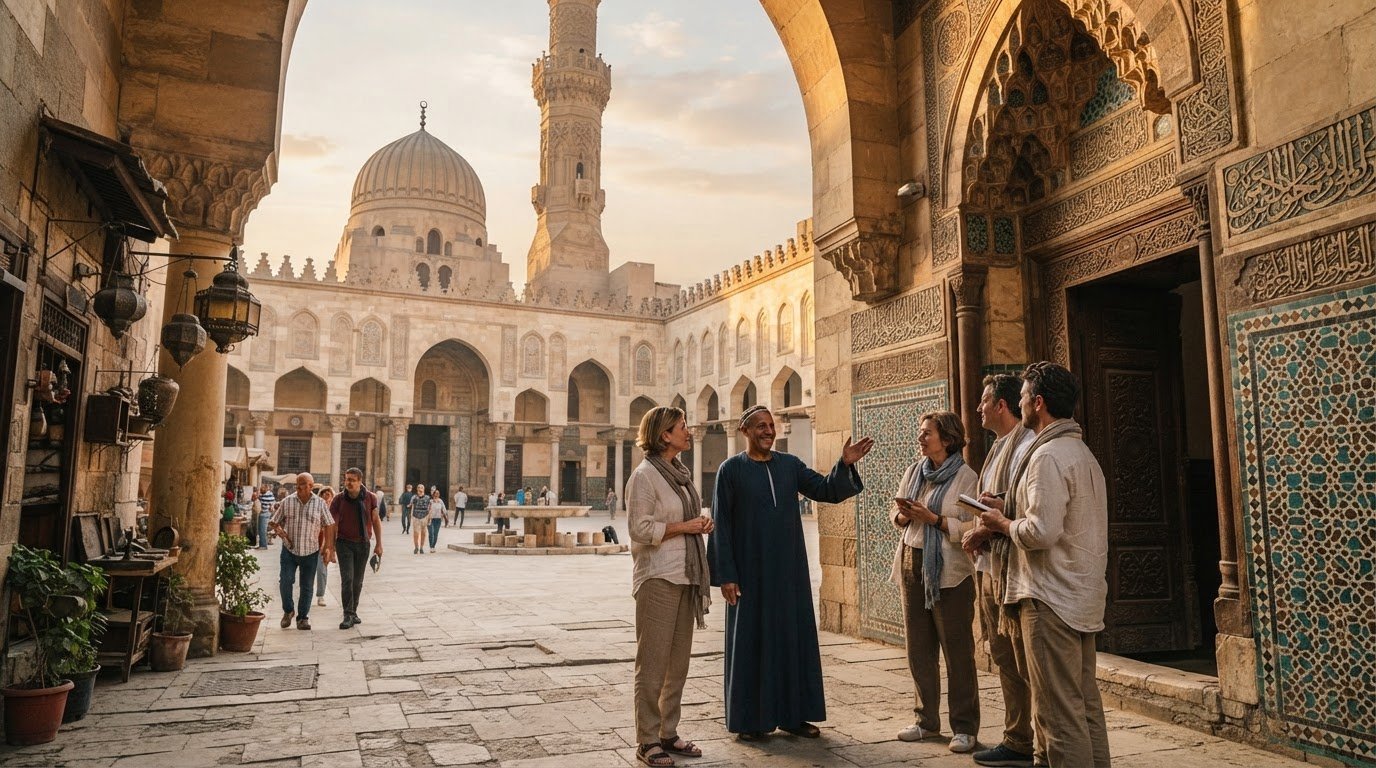
What stays with you may not be the grand dome, but the story behind a carved doorway or quiet courtyard. On a historic mosques Cairo tour, understanding the people, faith, and changing eras behind the architecture makes the details easier to read. With so many landmarks and unfamiliar features, it helps to know what to look for and how to prepare.
A first visit doesn’t need to feel like a history exam. Cairo’s mosques reflect centuries of artistic and spiritual life, while Historic Cairo is a living neighborhood shaped by residents, artisans, and merchants. With some context, the buildings feel less like monuments to pass through and more like places with stories to discover.
This guide introduces notable mosques and architectural details, with practical advice for visiting active places of worship. You’ll find ways to prepare for questions of etiquette, access, and walking, and learn how a local guide can connect individual sites to the wider story of Islamic Cairo. Use these points to decide whether a guided Historic Cairo experience suits your interests.
Key Takeaways
- A historic mosques Cairo tour can reveal how faith, architecture, and everyday life meet, rather than treating mosques as exhibits alone.
- Explore mosques as windows into different periods, and let the questions each site raises guide what you notice.
- Choose a guided or self-guided visit based on how much historical context, flexibility, and navigation support you prefer.
- Before visiting, research each site and review current access, clothing expectations, photography rules, and guidance around prayer times.
- A local guide can connect individual landmarks to wider stories. Cairo Trips’ Historic Cairo experience includes Islamic Cairo, historic mosques, Khan el-Khalili, and expert local guides.
What makes a historic mosques Cairo tour more than a sightseeing stop?
A historic mosques Cairo tour offers more than a close look at domes and stonework. It brings religious heritage, architecture, and living culture into the same experience, helping you see how a building’s design reflects its era and community. A mosque is first and foremost a place of worship, not simply an architectural exhibit. Keeping that in mind shapes how you observe, move through, and speak about the space.
Islamic Cairo is a layered historic setting, where monuments belong to a wider urban story rather than standing apart from everyday life. Its architecture reflects successive periods and dynasties. The Historic Cairo, a UNESCO World Heritage site overview offers a broad introduction to this heritage. A thoughtful visit makes room for both a building’s craftsmanship and the fact that people continue to gather and pray there.
What visitors may notice in Cairo’s historic mosques
Look slowly and details begin to emerge: a courtyard leading toward a prayer space, a minaret rising above surrounding rooftops, or inscriptions and patterned surfaces that draw the eye across a wall. Arrangements and decoration vary from mosque to mosque, shaped by each site’s history and purpose. Notice what is distinctive rather than searching for one design that represents them all.
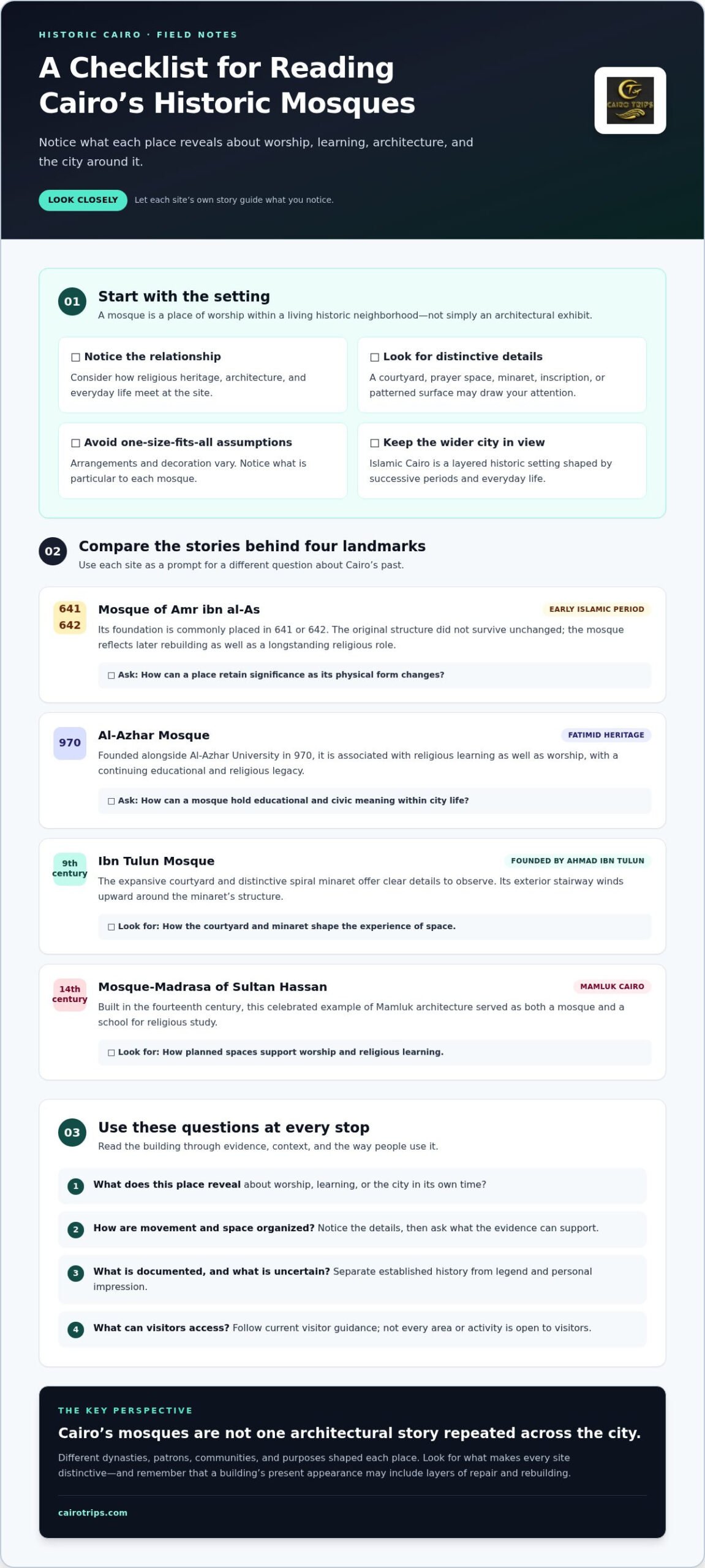
Al-Azhar Mosque, founded alongside Al-Azhar University in 970, offers a glimpse of Fatimid heritage and a continuing religious and educational legacy. The Mosque-Madrasa of Sultan Hassan, by contrast, is a celebrated example of Mamluk architecture. Together, they invite questions about how a mosque served its community and what its scale, spaces, and ornament may reveal about the period in which it took shape.
Why the stories behind the buildings matter
Architecture becomes easier to understand when you know something about the forces behind it. Religious use gives a prayer hall meaning beyond its materials; patronage can help explain a monument’s ambition; and changing city life places each site in a continuing human story. These layers can turn a glance at a doorway or inscription into a moment of connection, even if you’re not an architecture specialist.
Good interpretation also separates documented history from legend and personal impression. A guide can explain what is established about a site, identify where a story is uncertain, and show how its details fit into Cairo’s wider history. Local interpretation connects what you see at a mosque with the people, beliefs, and history that give the place meaning. For context beyond the mosques, Egypt historical tours can help place individual landmarks within a broader account of the past.
How Cairo’s historic mosques reveal different chapters of Islamic history
Cairo’s mosques aren’t a single architectural story repeated across the city. They reflect changing dynasties, patrons, communities, and ideas about how a religious institution could serve its surroundings. On a historic mosques Cairo tour, approach each site with a question rather than a checklist: what does this place reveal about worship, learning, or the city in its own time?
Cairo’s mosques reflect different eras, patrons, and religious communities, with each building offering its own window onto the city’s past. The Mosque of Amr ibn al-As, Al-Azhar Mosque, and Ibn Tulun Mosque each invite a different line of inquiry. Their histories also remind visitors that a building’s present appearance may include layers of repair and rebuilding, not just its original design.
The Mosque of Amr ibn al-As is traditionally dated to the early Islamic period in Egypt, with its foundation commonly placed in 641 or 642. Its original structure did not survive unchanged, so the mosque visitors encounter reflects later rebuilding as well as its longstanding religious role. Consider how a place can retain significance as its physical form changes.
Al-Azhar Mosque and the role of learning
Founded in 970 under the Fatimid dynasty, Al-Azhar is associated with religious learning as well as worship. Its history offers a way to consider how a mosque can hold educational and civic meaning within city life. The UNESCO World Heritage Centre’s description of Historic Cairo also presents the area as a place shaped by successive historical periods and significant monuments.
Don’t assume every area or activity is open to visitors. Follow current visitor guidance, and use a guide to understand the mosque’s historical role alongside what is accessible during your visit.
Ibn Tulun and Sultan Hassan: reading architecture with context
At Ibn Tulun Mosque, founded by Ahmad ibn Tulun in the ninth century, the expansive courtyard and distinctive spiral minaret offer clear details to notice. The minaret’s exterior stairway winds upward around its structure. At the Mosque-Madrasa of Sultan Hassan, built in the fourteenth century, the scale and planned spaces reflect a different moment in Mamluk Cairo. The complex served as both a mosque and a school for religious study.
These contrasts aren’t a simple progression from one “style” to another. Notice how each building organizes movement and space, then ask what the evidence can support. A knowledgeable guide can connect visible details to their historical setting without assigning a single meaning to every feature.
For a broader view of Cairo’s layered past, explore Cairo Trips’ Historic Cairo experience, where expert local guides bring Islamic Cairo and its historic mosques into a wider cultural story.
Guided or self-guided: which historic mosques Cairo tour fits your visit?
The right way to explore depends on what you want from the visit. A self-guided route gives you control over pace and priorities; a local guide adds context and helps connect sites. Neither approach is automatically better. Decide whether independence, historical explanation, or support with navigation matters most to you.
For a historic mosques Cairo tour, compare the options across four practical considerations:
- Historical context: Independent research lets you follow your own interests. A guide can explain references and relationships as you encounter them.
- Flexibility: Exploring alone makes it easier to linger or change plans. A guided visit gives the experience a shared structure.
- Navigation: Planning your own route can be rewarding, but it takes preparation. A guide can help connect stops and orient you along the way.
- Confidence: Independent visitors can feel at ease with advance research. A guide can answer questions as they arise on site.
When exploring independently may suit you
Set your own rhythm, pause over a detail that catches your eye, or spend longer at a site that feels especially meaningful. Independent exploration often suits travelers who enjoy researching history and making their own plans. Before setting out, plan your route and review current information about visitor access and etiquette at each mosque. Leave some flexibility, since arrangements can vary by site.
What a local guide can add to the experience
A knowledgeable guide makes unfamiliar details more approachable. Rather than leaving you to interpret an inscription or architectural feature alone, they can explain what is known and how a site relates to Cairo’s wider history and culture. They can also distinguish established information from interpretation, while giving you room to ask questions.
Guidance can be especially valuable if you’re visiting religious sites for the first time or want a broader story connecting one stop to the next. It doesn’t take away the pleasure of looking closely; it gives you more context for what you notice. Explore Cairo guided tours for more perspective on guided exploration.
If thoughtful local interpretation appeals to you, Cairo Trips’ Historic Cairo experience brings together Islamic Cairo, historic mosques, and Khan el-Khalili guided tour with expert local guides. Whether you choose guided discovery or independent wandering, let your interests set the pace and leave space for a detail or story to stay with you.
How to prepare for visiting historic mosques in Cairo respectfully
A little preparation can make a mosque visit more comfortable and help you focus on what you came to discover. Treat each site as a place of worship with its own visitor arrangements, rather than assuming guidance at one mosque applies everywhere. Plan with care, then be ready to adapt when you arrive.
Use this simple sequence before setting out:
- Research the site. Learn what makes the mosque distinctive and look for current visitor information from a reliable source.
- Review current arrangements. Check visitor access, posted directions, photography guidance, clothing expectations, and advice about prayer times for each site.
- Plan for comfort. Choose comfortable footwear and clothing suited to the day’s walking. A measured pace gives you time to look around attentively.
- Arrive ready to observe. Follow staff guidance, keep your voice considerate, and allow worshippers space.
Visitor guidance can differ from one religious site to another, so review each mosque’s current directions rather than relying on a single set of assumptions.
Check access and etiquette before you go
Visitor access and arrangements can change. Review the latest information for each mosque before your visit, then read posted directions on arrival. Check clothing expectations, photography permissions, and guidance around prayer times site by site. If instructions are unclear, ask staff politely before entering a space or taking a photograph.
Respectful behavior is often simple: follow the people responsible for the site, keep conversations low, and avoid interrupting worshippers. Stay aware of the space around you to help make the visit considerate for both visitors and the local community.
Make space for observation and reflection
Once inside, resist the urge to hurry from one detail to the next. Notice how the space is arranged, then look more closely at its materials, inscriptions, and patterns. These features can show you something about a building’s character, even if you don’t interpret every detail on your own.
Listen to the context around you, whether it comes from a guide, posted information, or the sounds of the space, instead of trying to photograph every feature. Some sites may limit photography, and a quiet moment can leave a stronger impression than a collection of images. Mosques remain active places of worship, so be patient: pause where appropriate, give others room, and let the visit unfold at a respectful pace.
For a local companion to help shape a thoughtful visit, explore Cairo Trips’ Historic Cairo experience, featuring Islamic Cairo, historic mosques, Khan el-Khalili, and expert local guides.
Experience Cairo’s historic mosques with a thoughtful local guide
After learning how to read a mosque’s architecture and prepare for a respectful visit, the next question may be how to bring individual impressions together. A knowledgeable local guide can connect the details to Cairo’s wider history and culture. The experience remains personal: you still have space to look closely, listen, and decide what resonates.
A connected introduction to Historic Cairo
Cairo Trips’ Historic Cairo experience includes Islamic Cairo, historic mosques, Khan el-Khalili, and expert local guides. It brings mosque heritage into a broader cultural setting, rather than treating each landmark as an isolated stop. Thoughtful planning and local insight help connect the stories of historic sites while leaving room to appreciate each place’s character.
That connection can help when a carved detail, a change in architectural style, or a site’s continuing religious role raises questions. A guide can provide context in clear, conversational language and explain how a particular place belongs to a larger story. The aim isn’t to turn every moment into a lecture. It’s to make the history easier to follow while letting the surroundings speak for themselves.
Choose a visit shaped around curiosity
Before you explore, consider what you hope to understand. Are you curious about how religious and civic life meet, or how architecture reflects different historical periods? Perhaps you want to notice decorative details or learn how historic places remain part of the city’s present. Bringing a question or two can give your visit focus without dictating what you must find.
A local guide can offer background and help unfamiliar references make sense. That support complements, rather than replaces, your own reflection. You might remember a story, a pattern, or simply the feeling of pausing in a remarkable space. Each visitor’s attention settles differently, and you don’t need specialist knowledge to appreciate what you see.
If a historic mosques Cairo tour feels like the right way to explore, let your curiosity shape the experience. Explore Historic Cairo with Cairo Trips and discover Islamic Cairo, historic mosques, and Khan el-Khalili with expert local guides.
Let curiosity lead your next Cairo discovery
A meaningful visit doesn’t depend on recognizing every architectural feature. It begins with looking closely, asking questions, and meeting each place on its own terms. As you plan a historic mosques Cairo tour, consider what you’d most like to understand, then leave room for the unexpected: a detail that catches your eye, a story that shifts your perspective, or a quiet moment that stays with you.
If you’d enjoy thoughtful planning and expert local insight, Cairo Trips’ Historic Cairo experience offers a way to follow the stories of Islamic Cairo and its historic mosques. A local guide can make the connections clearer while leaving space for your own impressions.
Explore Historic Cairo with Cairo Trips and begin imagining a visit shaped by curiosity, care, and a deeper sense of place.
Frequently Asked Questions
What is included in a historic mosques Cairo tour?
A historic mosque tour generally brings visitors to religious and architectural landmarks while offering context about their history and surroundings. Cairo Trips’ Historic Cairo experience includes Islamic Cairo, historic mosques, and Khan el-Khalili, with expert local guides sharing local insight. Consider whether you’d like a wider cultural experience alongside your mosque visits.
Which historic mosques should I see in Cairo?
Al-Azhar Mosque, Ibn Tulun Mosque, the Mosque of Amr ibn al-As, and the Mosque-Madrasa of Sultan Hassan are useful starting points for learning about Cairo’s mosque heritage. Rather than trying to see every landmark, choose based on the stories that interest you, such as learning, architecture, or the city’s development. Treat the list as inspiration, since current access and individual itineraries can differ.
Is a guided mosque tour in Cairo worth it?
A guide can be valuable if you want unfamiliar names, inscriptions, and architectural details explained as you encounter them. On a historic mosques Cairo tour, that context can help you connect a building to its setting instead of relying only on what you’ve read beforehand. Independent visits suit travelers who enjoy research and setting their own pace. Consider whether you’d rather ask questions in the moment or follow your own plan.
Can visitors enter historic mosques in Cairo?
Visitors may be able to enter some areas, but access depends on the mosque and its current arrangements. Don’t assume every prayer space or interior area is open to visitors. On arrival, look for posted directions and follow staff guidance, especially if worship is taking place. If an area is unavailable, you can still appreciate the building’s exterior and learn about its history without disrupting people using it for prayer.
What should I wear when visiting a mosque in Cairo?
Choose clothing that feels respectful and comfortable, then review the specific mosque’s visitor guidance before your visit. Expectations can vary, so don’t assume that advice for one site applies to another. If staff ask you to adjust something, respond calmly and follow their direction. Comfortable clothes and shoes can also make walking between sites more pleasant, especially if you plan to spend time standing and looking closely.
How much time do you need for a historic mosques Cairo tour?
There isn’t one fixed amount of time that suits every visit. The pace depends on how many sites you plan to see, the arrangements at each one, and whether you want time for explanation or quiet observation. Allow room for pauses and possible changes rather than packing the day tightly. If you’re joining an organized experience, use its itinerary details to understand the planned pace.
Are historic mosque tours in Cairo suitable for first-time visitors?
Yes, they can suit first-time visitors who are curious about Cairo’s religious heritage and architectural history, even without specialist knowledge. A guide can clarify unfamiliar references, while independent research can help you arrive with questions of your own. Before choosing a visit, think about your preferred walking pace and how much context you’d enjoy. Reviewing site guidance ahead of time can also help you feel prepared.
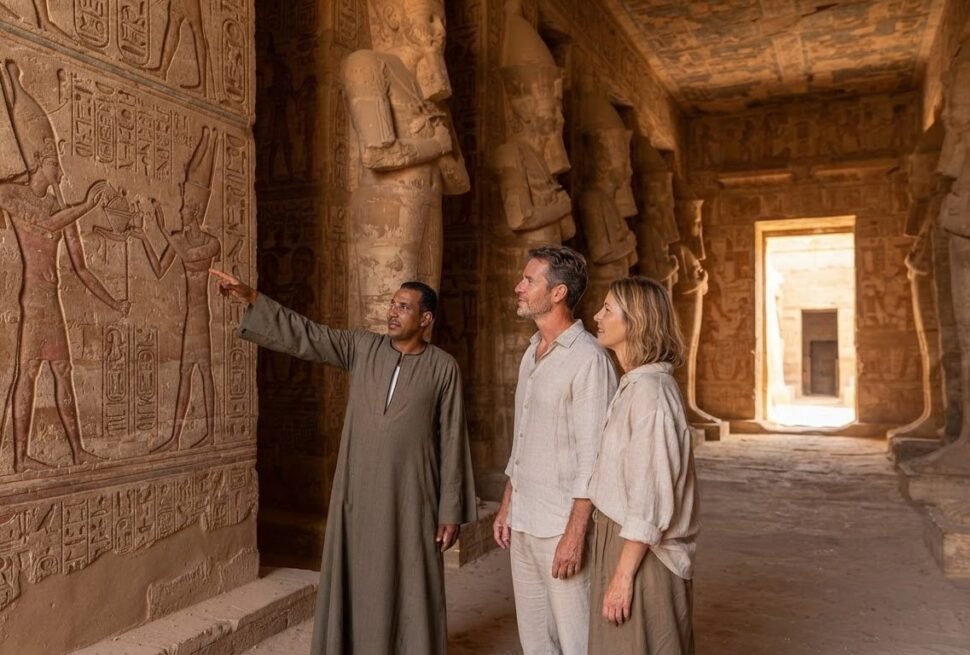

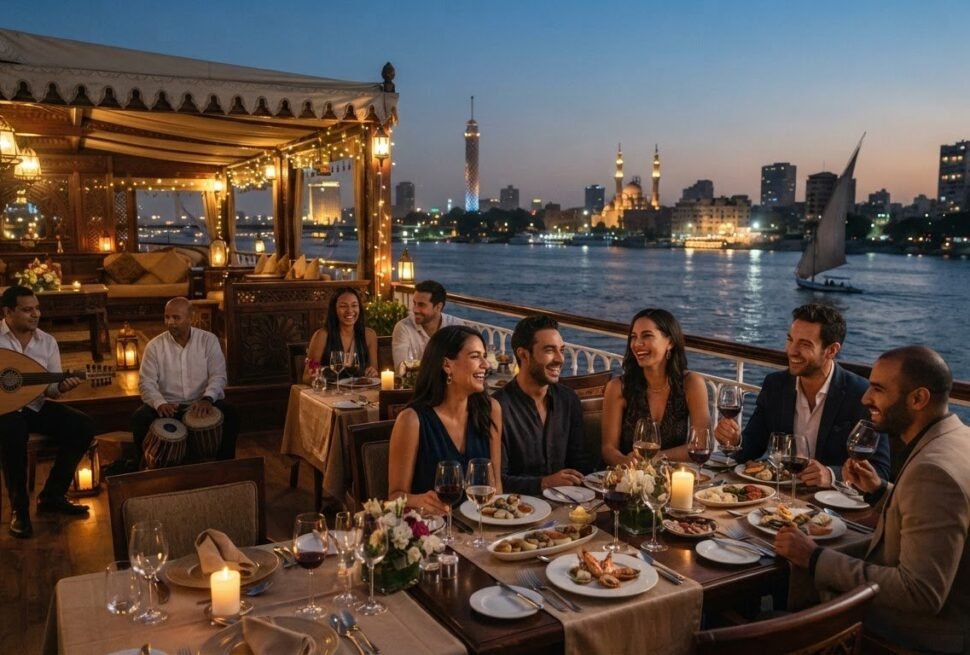

[…] Trips’ Historic Cairo tours offer another perspective through historic mosques and layered built heritage. Rather than treating […]