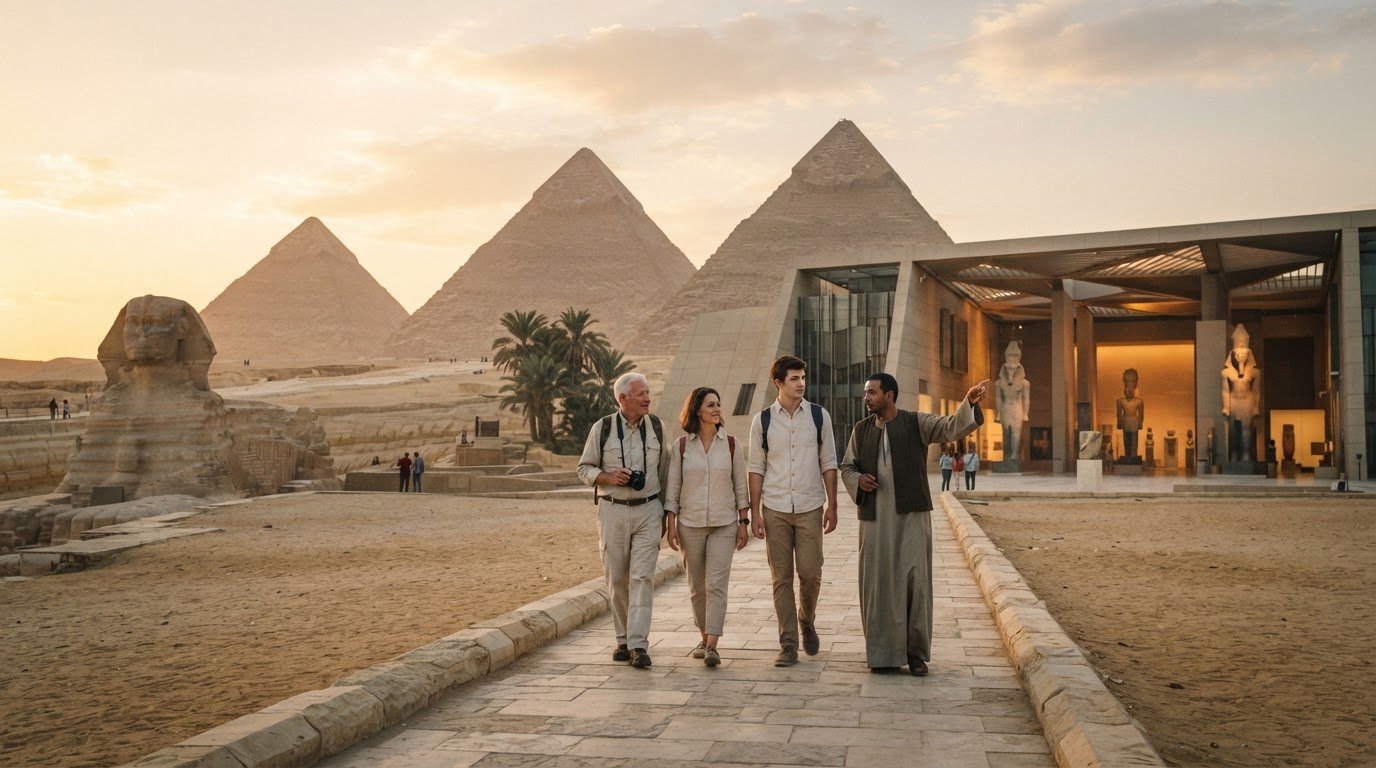
What if the best way to experience the Pyramids, the Sphinx, and a museum isn’t to see as much as possible, but to let each place tell part of one story? It’s natural to wonder how these celebrated sights fit into a single Pyramids Sphinx museum tour, especially when a full day can feel like a lot to take in.
With a thoughtful sequence, the monuments offer a sense of scale and wonder, while a museum visit brings the people and objects of Egypt’s past closer. The museum choice matters: Cairo Highlights pairs the Pyramids and Sphinx with the Egyptian Museum, while the Grand Egyptian Museum is a separate institution. Knowing the difference helps you choose a visit that matches your interests and plan a comfortable pace.
This guide explains what each stop adds, how to choose a museum, and how to make the most of your time. An expert local guide can connect the details through clear, engaging stories. The aim isn’t to hurry from one landmark to the next, but to make room for a visit that feels meaningful and well considered.
Key Takeaways
- A well-planned Pyramids Sphinx museum tour brings monumental architecture, symbolism, and museum collections together in a connected story.
- Choose between the Egyptian Museum and the Grand Egyptian Museum based on the collections and experience you most want from your visit.
- Shape the day around your interests and energy, leaving space for breaks, questions, and a comfortable pace.
- Review current visitor information before you go, as access details and opening arrangements can change.
- A thoughtful local guide can add context to each stop and help the landmarks feel connected rather than rushed.
What a Pyramids, Sphinx, and Museum Tour Brings Together
A visit to the Pyramids, the Sphinx, and a museum combines outdoor monuments with indoor collections. Rather than treating each as a separate photo stop, you can consider how architecture, royal power, symbolism, and objects from daily and ceremonial life fit into a wider account of ancient Egypt. The change of scale is part of the appeal: the monuments make their impression in the open air, while museum displays bring individual objects and human stories into view.
A Pyramids Sphinx museum tour offers more than three famous names on an itinerary. Its value lies in the connections between them, with each stop providing a different perspective. In one sentence: This tour format connects royal monuments, the Sphinx’s enduring mysteries, and museum collections to offer a broad introduction to ancient Egypt.
What each stop adds to the visit
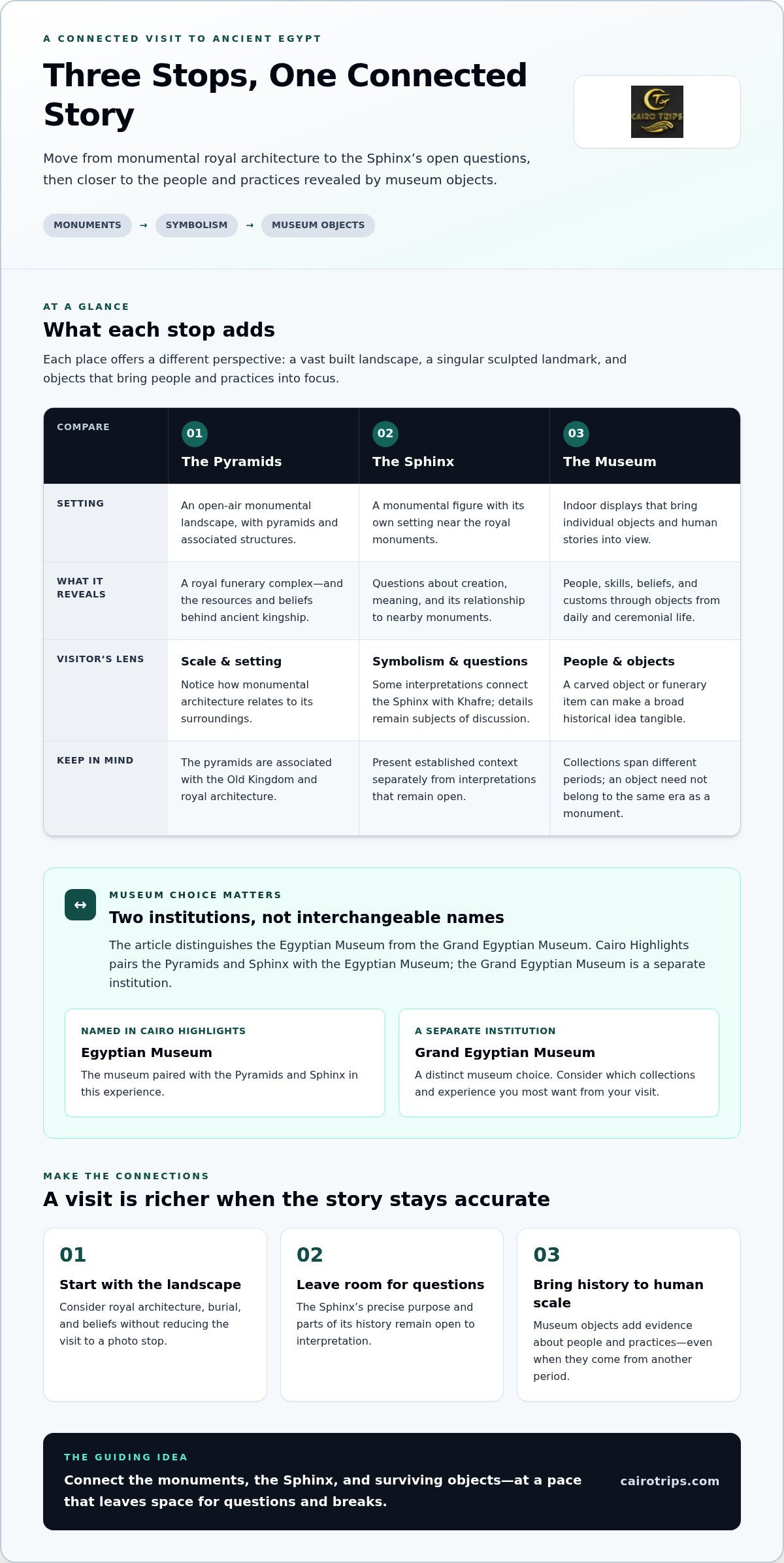
- The Pyramids: These monumental structures are part of a royal funerary complex, reflecting the resources and beliefs behind ancient kingship. The pyramid complex overview describes the pyramids alongside associated structures and the Great Sphinx.
- The Sphinx: Distinct from the pyramids, this monumental figure has its own setting and raises questions about its creation, meaning, and relationship to nearby royal monuments. Some interpretations connect it with Khafre, but details of its purpose and history remain subjects of discussion.
- The museum: Objects offer a more intimate scale, helping visitors consider the people, skills, beliefs, and customs behind the stone architecture. A carved object or funerary item can make a broad historical idea feel tangible.
Together, these places invite a shift in perspective: from an immense built landscape, to a singular sculpted landmark, and then to objects that bring people and practices into focus. A thoughtful guide can explain what is known, distinguish it from interpretation, and welcome questions without turning the visit into a lecture.
Who may enjoy combining the three experiences
For first-time visitors, combining the monuments with a museum can provide a wide-ranging introduction without requiring prior knowledge. Families and curious travelers may appreciate the change of setting, moving between open-air landmarks and galleries with varied objects to discuss. The three stops are substantial, so travelers who know their energy is limited may prefer a gentler pace. Focus on what you most want to understand instead of trying to see everything in a rush.
The aim is not to collect stops for their own sake. It is to leave with a clearer sense of how the monuments, the Sphinx, and surviving objects illuminate different parts of the same long history.
How the Pyramids, Sphinx, and Museum Connect in One Story
Seen together, the monuments and museum suggest a path from the ambitions of ancient rulers to the beliefs and objects that shaped life around them. The pyramids are monumental royal architecture associated with the Old Kingdom. The Sphinx belongs to this same landscape, but its precise purpose and some details of its history remain open to interpretation. Museum collections add another perspective, preserving objects from different periods rather than representing one single moment in time.
A visit connects Old Kingdom royal architecture with the Sphinx’s enduring questions and museum objects that offer material evidence of ancient Egyptian life. This is a useful starting point, not a claim that every monument and artifact belongs to the same era. Keeping those distinctions clear makes the story richer and more accurate.
From monumental architecture to ancient beliefs
The scale and placement of the pyramids invite questions about royal authority, burial, and beliefs about life beyond death. Architecture can express more than engineering skill: its form and setting may also reflect the values and religious ideas of the society that created it. The pyramid complex overview offers background on the pyramids and surrounding monuments. The Sphinx adds a compelling point of discussion, though its intended meaning should be presented with care where interpretations differ.
At the sites, a guide can draw attention to details that help you compare what you see: a monument’s relationship to its surroundings, the use of carved imagery, or the way an object represents authority or belief. Rather than reciting dates in isolation, a thoughtful storyteller can separate established context from ongoing questions and explain why both matter.
How museum objects add another layer
In a gallery, objects bring history closer to human scale. A tool, vessel, ornament, or funerary item can prompt questions about materials, craft, daily routines, and the people who used or valued it. Museum displays also shape how visitors encounter the past: labels select details to explain, conservation protects fragile objects, and curatorial choices organize collections into themes. An object can deepen a monument visit even when it comes from a different period.
Museum collections deepen a monument visit by preserving objects that help explain the people, practices, and beliefs behind ancient architecture. That link between place and object is central to a rewarding Pyramids Sphinx museum tour. Cairo Trips’ Cairo Highlights experience brings the Pyramids, Sphinx, and Egyptian Museum together with thoughtful planning, local insight, and expert local guides, helping visitors follow the connections at a comfortable pace.
Which Museum Fits a Pyramids and Sphinx Tour?
The museum name in a tour description matters. The Egyptian Museum and the Grand Egyptian Museum are separate institutions with different collections and visitor experiences. A listing that says only “museum” may leave an important detail unclear. Before choosing a Pyramids Sphinx museum tour, look for the institution’s full name and make sure it matches the collection you most want to see.
Egyptian Museum and Grand Egyptian Museum: What is the difference?
Both museums offer a window into ancient Egypt, but they aren’t interchangeable. The Grand Egyptian Museum is the newer institution, and its main galleries include the complete Tutankhamun collection. The Egyptian Museum remains home to a significant collection of artifacts, though the Tutankhamun collection has moved to the Grand Egyptian Museum.
| Museum | What to know | Consider it if you’re interested in |
|---|---|---|
| Egyptian Museum | An established museum with a significant collection of Egyptian artifacts. | Seeing the museum specifically named in an itinerary and exploring its continuing collections. |
| Grand Egyptian Museum | A separate institution whose main galleries include the complete Tutankhamun collection, the Grand Staircase, and the Khufu Solar Boat Hall. | Its major displays, including the Tutankhamun collection. |
The Egyptian Museum and the Grand Egyptian Museum are distinct institutions: the former retains a significant artifact collection, while the latter’s main galleries include the complete Tutankhamun collection. This distinction is useful when tour titles, summaries, and itineraries don’t use the same wording.
Match the museum visit to your interests
Start with what you hope to see indoors. If Tutankhamun’s tomb treasures are a priority, the Grand Egyptian Museum is the relevant institution. If an itinerary names the Egyptian Museum, expect a visit to that museum instead. Neither name should be treated as shorthand for the other, and you shouldn’t infer the museum stop from a tour title alone.
Next, review the current exhibitions and visitor guidance published by the museum. Opening arrangements, access, and displays can change, so official museum information is the best place to check for current details before your visit. Let the museum choice shape the day’s focus rather than treating either institution as a quick, interchangeable add-on.
Cairo Trips’ Cairo Highlights includes the Pyramids, Sphinx, and Egyptian Museum. The Grand Egyptian Museum is a separate institution, not the museum named in Cairo Highlights. Reading the itinerary carefully sets clear expectations and helps the museum collection complement the monuments you’ve explored outdoors.
How to Plan a Comfortable Pyramids, Sphinx, and Museum Day
A rewarding day isn’t measured by how quickly you move between landmarks. It comes from choosing what matters most, leaving room to pause, and matching the plan to your energy. Use this sequence to shape a Pyramids Sphinx museum tour that feels considered rather than crowded.
Shape the day around your interests and energy
Begin with the experience you’re most looking forward to. You may want to focus on architecture, make time for photography, or spend longer with museum collections. Consider who’s travelling with you, too: mobility needs, family pace, and everyone’s comfort can influence how much you take on. A little breathing room between outdoor exploration and indoor exhibits can make the day feel more balanced.
- Choose your priorities. Decide whether the monuments, the Sphinx, or museum displays are your main focus. Naming one or two priorities helps you avoid trying to give every stop equal time.
- Be clear about the museum. The Egyptian Museum and the Grand Egyptian Museum are separate institutions. Match your interests to the museum named in the itinerary, then plan the rest of the visit with that choice in mind.
- Set a comfortable pace. Allow space to look around, rest, and ask questions. If you’re travelling with children or anyone who needs more time to move between places, build that into your expectations rather than treating it as a delay.
- Prepare for time outdoors. Wear comfortable clothing and footwear suited to walking, and bring water so you can take breaks as needed. A day that includes open-air landmarks and indoor galleries calls for practical comfort as well as curiosity.
- Review current visitor information. Before setting out, consult official site and museum sources for opening hours, access notices, and photography rules. This helps you plan around current conditions instead of relying on assumptions or outdated details.
Prepare for changing visitor information
Visitor arrangements can change, so use official updates as part of your planning, not as an afterthought. Check each relevant site’s guidance close to your visit, especially if you have a particular access need or hope to take photographs. Current official information helps you arrive with realistic expectations and adjust calmly if details have changed.
Keep the day flexible enough for a quiet pause or an unexpected question. A knowledgeable Cairo tour guide who suits your interests and preferred pace can make those moments useful, linking what you see to the wider story without pressing you to hurry from one stop to the next.
For a thoughtfully planned visit to the Pyramids, Sphinx, and Egyptian Museum, explore Cairo Trips’ Cairo Highlights experience, enriched by local insight and expert local guides.
Experience the Pyramids, Sphinx, and Egyptian Museum with Cairo Trips
A visit feels more coherent when the landmarks are treated as connected parts of an experience, not simply names on a list. Cairo Trips’ Cairo Highlights brings together the Pyramids, Sphinx, and Egyptian Museum with thoughtful planning, local insight, and expert local guides. For travelers considering a Pyramids Sphinx museum tour, this combination offers a way to encounter monumental sites and museum collections with context to help make sense of what they’re seeing.
The value of guidance often lies in the small connections. A detail in a monument’s setting, a question about its purpose, or an object encountered indoors can open up a wider conversation about ancient history. A guide can help make those moments easier to follow while leaving room for personal curiosity and reflection.
What a thoughtful local guide can bring
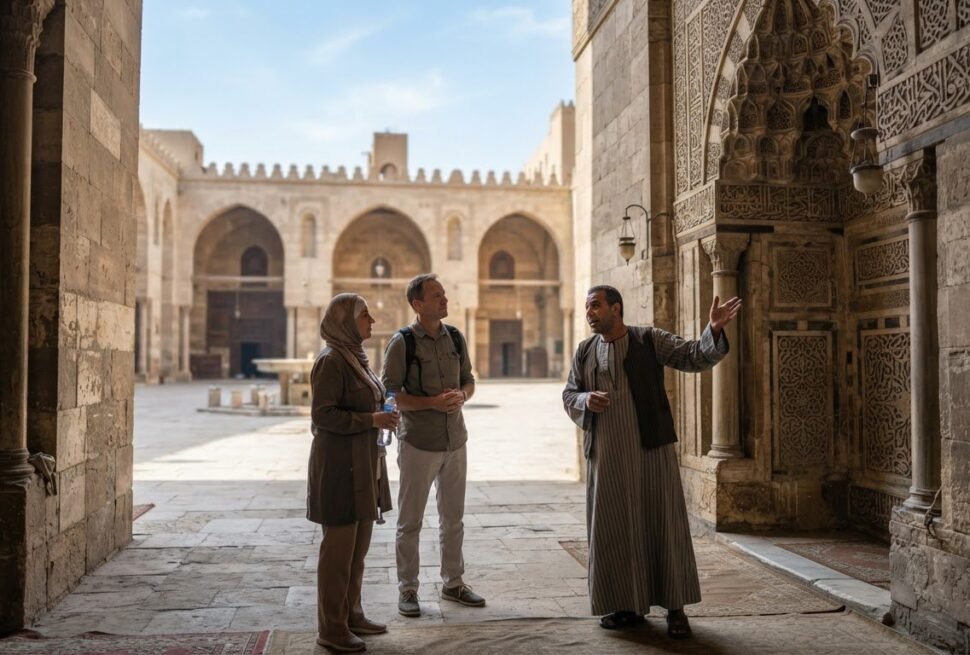
At an ancient site, a clear story can help visitors look beyond scale and notice how the landscape, architecture, and surviving details relate. In the museum, that same thread can connect objects with the people and ideas they represent. Rather than offering a string of disconnected dates, an expert local guide can explain the context in accessible language and distinguish established history from questions that remain open.
Good guiding also makes space for travelers. You might ask about a feature you noticed, pause to look more closely, or follow a topic that captures your interest. Attentive pacing helps those exchanges feel natural, so the day is shaped by understanding as well as movement between stops. The experience can be especially rewarding when a guide welcomes questions and adapts explanations to what the group is curious about.
Take the next step toward a more meaningful visit
The Pyramids, Sphinx, and Egyptian Museum each offer a distinct perspective. Together, they can give first-time visitors a broad introduction to ancient Egypt, balancing monumental architecture with closer encounters with museum collections. The aim isn’t to absorb every detail at once. It’s to leave with a few clear connections, a stronger sense of the places, and questions worth carrying with you.
Cairo Trips’ Cairo Highlights includes visits to the Pyramids, Sphinx, and Egyptian Museum. Thoughtful planning and local insight help bring the experience into focus, while expert local guides make historical context approachable and engaging. The Grand Egyptian Museum is a separate institution, so this experience centers on the Egyptian Museum.
If this kind of connected visit suits the way you like to explore, Explore Cairo Highlights with Cairo Trips.
Let Your Curiosity Shape the Visit
Before your day begins, choose one question you’d like to carry with you. It might be how a monument was made, what a carved detail could mean, or what an object reveals about the person who used it. That point of curiosity can give a Pyramids Sphinx museum tour a personal thread, turning what you notice into part of your own story.
Cairo Trips’ Cairo Highlights visits the Pyramids, Sphinx, and Egyptian Museum. Thoughtful planning, local insight, and expert local guides help bring the experience into focus, with space to listen, look closely, and follow the questions that matter to you. The result can be more than a collection of famous sights: it can be a memorable encounter with a history that still invites discovery.
Ready to shape your visit around context and curiosity? Explore Cairo Highlights with Cairo Trips.
Frequently Asked Questions
Is one day enough to visit the Pyramids, Sphinx, and a museum?
Yes, one day can work if you keep your priorities realistic. A Pyramids Sphinx museum tour combines substantial outdoor and indoor visits, so choose the museum and a few key interests before you set out. For example, you might focus on the main landmarks and select a handful of museum galleries rather than trying to see every display. Leave room for breaks and changes in pace.
Can you go inside the Pyramids during a guided tour?
Yes, visitors can enter some pyramid interiors, but entry isn’t automatically part of a guided visit. At the plateau, interior access requires a separate ticket, and availability can be limited or change for conservation. The Great Pyramid of Khufu has a separate ticket and a daily visitor limit, and photography is forbidden inside it. Check current official access details and clarify which experience your itinerary names.
How much time should you allow for a museum visit?
There isn’t one ideal visit length; it depends on your interests, energy, and the museum’s current displays. If a particular collection matters to you, identify it in advance and make it your anchor, then leave time to explore nearby galleries without rushing. A focused visit can suit a day with several stops, while travelers who enjoy reading labels and comparing objects may prefer a less crowded itinerary.
What should I wear for a Pyramids and Sphinx tour?
Choose comfortable clothing and walking shoes that suit a day spent moving between outdoor sites and indoor spaces. A hat and sun protection can be helpful under open skies, and carrying water makes it easier to pause when you need a drink. Consider footwear carefully if you’ll be walking over uneven ground. Dressing in layers can also help you stay comfortable as your surroundings change.
Are the Pyramids and Sphinx visited at the same stop?
Yes. The Pyramids and Great Sphinx are both within the same plateau site, so they’re commonly visited as part of the same stop. General plateau admission covers access to the exterior of the three pyramids, the Sphinx, and the Valley Temple. Moving among points of interest may require using the site’s designated shuttle service, so review current visitor guidance before planning how you’ll get around.
Do museum opening hours change during the year?
Yes, opening arrangements can vary, including during Ramadan, and schedules may be revised. As of October 2026, the Grand Egyptian Museum lists its main galleries as open from 9:00 a.m. to 6:00 p.m., with reduced Ramadan hours; the complex has separate hours. Don’t assume those times apply to the Egyptian Museum. Check the official website for the specific institution and date you plan to visit.
Can children enjoy a Pyramids, Sphinx, and museum tour?
Yes, children can enjoy the visit, especially when adults make room for curiosity and breaks. Invite them to look for a detail in a monument, then ask what they notice about an object in the museum. Keep expectations flexible: walking, open-air conditions, and gallery time can be tiring for younger travelers. A shorter list of shared interests may make the day more engaging than trying to see every landmark and exhibit.