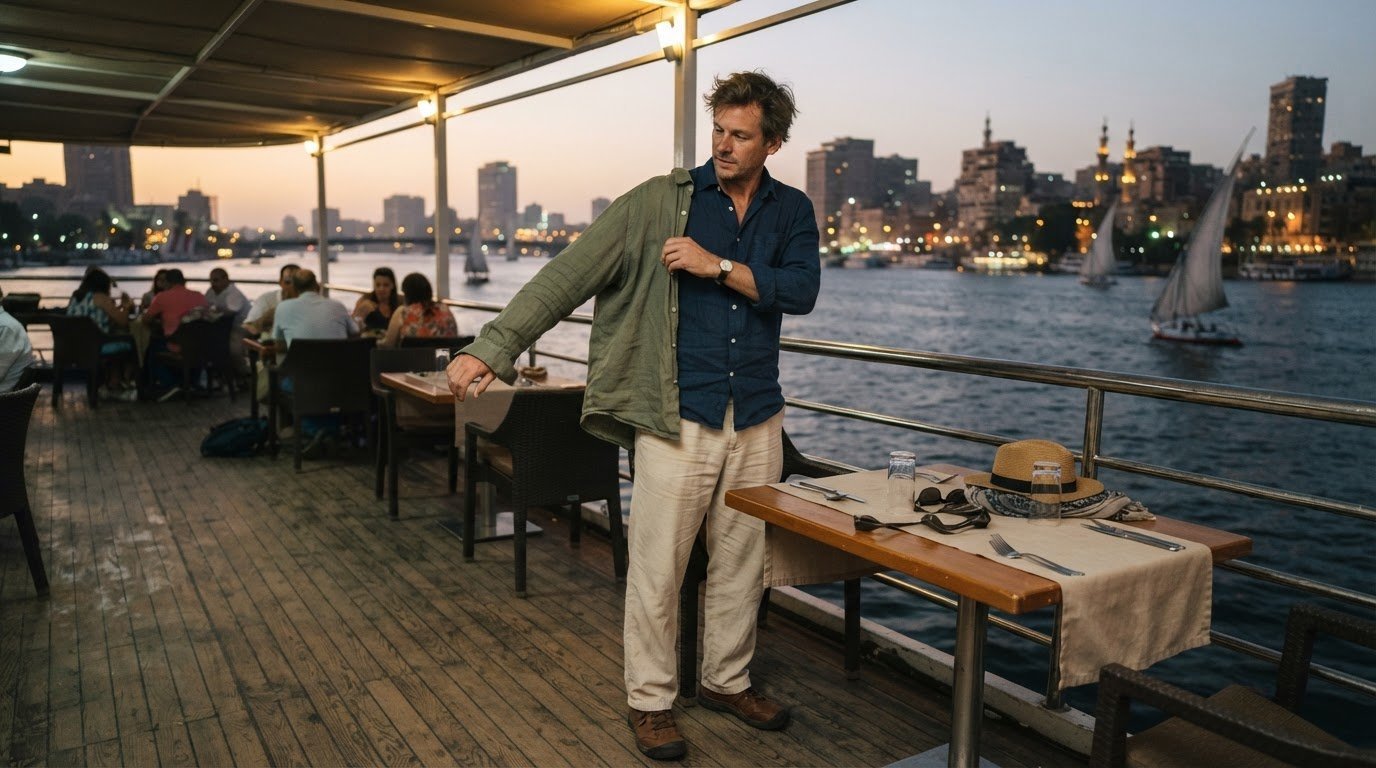
For what to wear in Egypt in March, men can start with loose, breathable clothes: daytime temperatures range from 15 to 25°C, and a light layer helps when the air cools after sunset. Long trousers and a shirt that covers the shoulders make a practical, modest choice for sightseeing and mosque visits, while a hat and sunglasses offer welcome protection beneath the sun.
It’s natural to wonder whether March calls for summer clothes or something warmer. For what to wear in Egypt in March, plan for both: choose lightweight fabrics for long days outdoors, then add a light sweater or jacket for cooler evenings. This guide covers useful clothing and footwear, easy layering after dark, sun-protection accessories, and what to wear when visiting mosques.
Key Takeaways
- Choose loose, breathable clothing and sturdy footwear to stay comfortable while exploring in the daytime.
- Pack a light sweater or jacket so you can adjust easily when evenings turn cool.
- Bring a hat, sunglasses, and a scarf for practical sun protection and an extra layer when useful.
- Plan for mosque visits with modest clothing that covers your shoulders and legs, and follow the site’s visitor guidance.
1. What should men wear in Egypt?
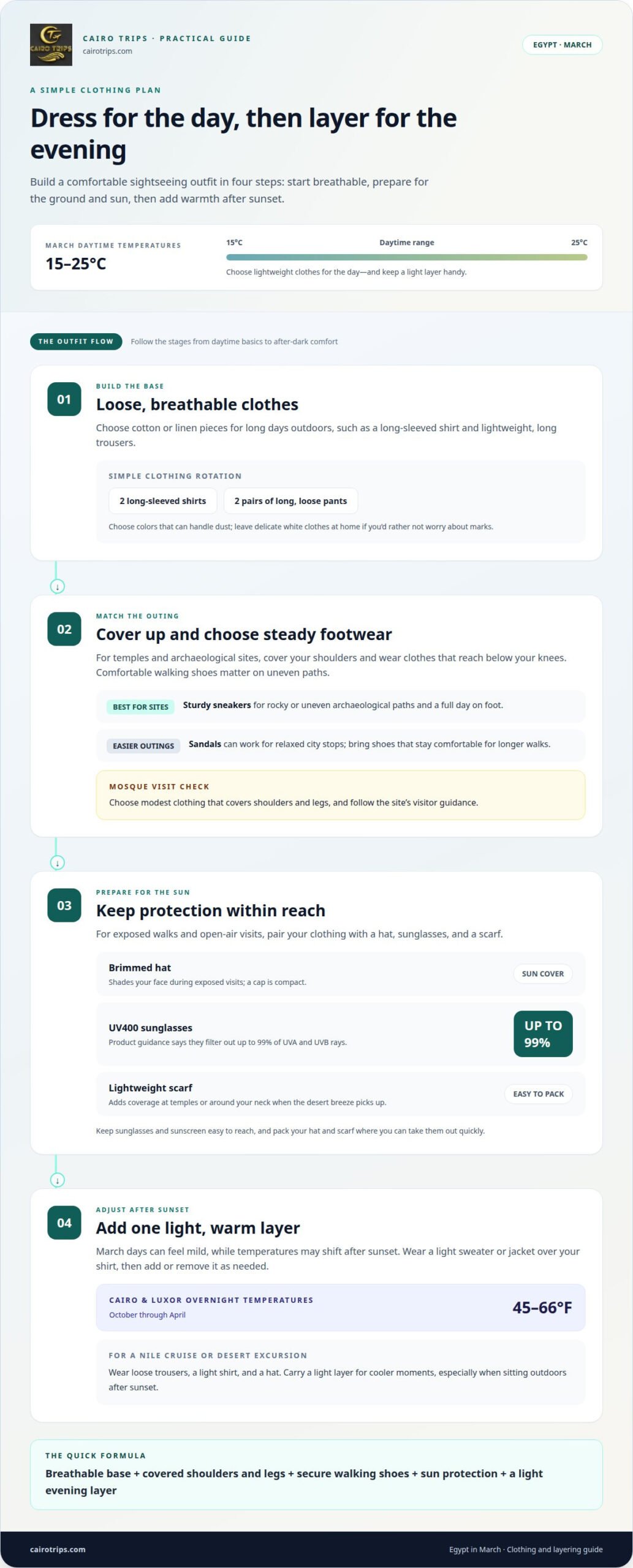
The practical answer to what to wear in Egypt in March starts with flexible layers: daytime temperatures range from 15 to 25°C. Pack loose, breathable clothes in cotton or linen, such as a long-sleeved shirt and lightweight trousers. These fabrics keep sightseeing comfortable without leaving shoulders or legs exposed.
Build a small rotation around two long-sleeved shirts and two pairs of long, loose pants. Choose colors that can handle dust, and leave delicate white clothes at home if you’d rather not worry about marks. The Centers for Disease Control and Prevention recommends loose, lightweight clothing for outdoor activities in hot weather. A hat and sunglasses also help during exposed walks.
For temples and archaeological sites, choose clothes that cover your shoulders and reach below your knees. The pyramids and other historic sites can have uneven paths, so comfortable walking shoes matter as much as breathable fabric. A tourist outfit can be relaxed and still conservative; don’t rely on shorts or sleeveless tops for a full day of cultural visits.
Sturdy sneakers are a practical choice for walking and sightseeing, especially on rocky, uneven archaeological-site paths. Sandals can work for easier city outings, but bring shoes that stay comfortable through a full day on foot.
For a Nile cruise or desert excursion, wear loose trousers, a light shirt, and a hat. Add sunglasses for open-air hours, and carry a light layer for cooler moments. These versatile pieces suit changing conditions without making your luggage bulky.
For swimming or a beach visit, pack a swimsuit, sandals, and a light cover-up for moving between the water and other areas. Keep your sightseeing clothes separate so they stay comfortable and ready for your next outing.
Women visiting in March can use the same breathable approach: loose long-sleeved tops and long trousers are practical daytime clothes. November through March temperatures in Egypt can range from 10 to 25°C, so a light sweater or jacket can add warmth during cooler winter mornings and evenings.
2. Layering for cool evenings
March days can feel mild, but the temperature may shift after sunset. Cairo and Luxor overnight temperatures are described as ranging from 45°F to 66°F from October through April. Pack a light sweater or jacket that fits over a shirt, then add or remove it as the evening changes. This simple layer keeps your daytime clothes useful after dark.
Build your evening outfits around pieces that work together: a breathable shirt, long trousers, and a warm outer layer. A thin sweater is easy to carry while walking, while a lightweight jacket can feel more comfortable outdoors. Don’t rely on shorts as your only option; long trousers suit an evening stroll and are practical if your plans include mosques.
For a Nile cruise, bring a layer you can put on while sitting outdoors after sunset. A collared shirt beneath a light sweater makes a comfortable evening outfit without requiring a separate set of clothes. If you’re planning an evening on the water, explore Nile cruise evenings as part of your itinerary.
A small shoulder bag can hold a folded layer when you’re walking between dinner and an evening visit. Keep it simple: bring a sweater or scarf, personal essentials, and sunglasses if you’ll still be outdoors before sunset. Choose a bag that sits securely and leaves your hands free.
Dresses can work well with a cardigan or light jacket. A long-sleeved layer adds warmth and makes an outfit more adaptable for an evening stop. Set aside your evening clothes before packing, then check that each shirt, pair of trousers, and outer layer works with at least one other item. This keeps your bag lighter and gives you practical choices for cool evenings.
3. Scarves and sun-protection accessories
A scarf earns space in a March packing list because it has several uses. Carry one for extra coverage when visiting temples, or wrap it loosely around your neck when the desert breeze picks up. Two or three scarves give you a choice of fabric and color, while a lightweight one folds neatly into a day bag.
For time outdoors, the Centers for Disease Control and Prevention recommends a hat, sunglasses, and lightweight, loose-fitting clothing to help protect against sun exposure. Choose a brimmed hat that shades your face and wear it during open-air visits to the pyramids or other exposed places. A cap is compact; a broad-brimmed hat provides more coverage around the face.
Look for sunglasses labeled UV400. They filter out up to 99% of UVA and UVB rays, according to the product guidance in the research used for this article. Keep them in a protective case when they’re not on your face, especially when moving between walking routes, cafés, and archaeological sites.
These accessories work alongside your clothes, rather than replacing them. A scarf can add coverage over a shirt, while a light jacket is useful when the weather cools later. For female travelers, a scarf can also serve as an optional extra layer at temples. Choose breathable fabric that feels comfortable over your hair or shoulders.
Think through your day’s route before choosing footwear and accessories. Sandals may suit a relaxed stop, but secure walking shoes are more practical on uneven ground. Keep sunscreen and sunglasses easy to reach, rather than buried under spare clothes. For a desert excursion, pack your hat and scarf where you can take them out quickly. Small choices like these make it easier to maintain sun protection throughout the day.
4. Modest dress and mosque visits
For women, comfortable March clothing can be loose trousers or a long skirt with a breathable, long-sleeved top. Daytime temperatures in Egypt during March range from 15 to 25°C, so a light layer can help during cooler periods. At mosques, plan clothes that cover the ankles, elbows, décolletage, and hair. A scarf makes the final step simple.
Think of mosque clothing as a respectful outfit, not a separate costume. Choose a top with sleeves that reach your elbows, then pair it with a skirt or trousers covering your ankles. Carry a scarf in your day bag to cover your hair before entering. A loose dress can also work if its hem and neckline provide suitable coverage.
Before leaving your hotel, use this quick clothing check: sleeves cover your elbows, the hem reaches your ankles, and the neckline covers your décolletage. Keep a scarf somewhere easy to reach. This makes it easier to adjust at a mosque entrance without changing your entire outfit. A scarf can also shield your head on a sunny walk between places.
For general sightseeing, loose, breathable clothes help balance sun protection and comfort. Add sunscreen to your day bag and reapply according to its label, especially after time outdoors. A hat and sunglasses complement covered clothing; neither replaces sunscreen. If your day includes a mosque and an outdoor visit, dress for the mosque first, then adjust with removable layers.
Hotels catering to foreign visitors with pools generally don’t have swimwear dress codes, but pool clothing isn’t suitable for mosque visits. Keep a cover-up with your swimsuit for moving through shared spaces. That distinction helps you pack for both settings without confusing pool attire with respectful visiting clothes. For a thoughtfully planned cultural itinerary, plan your Egypt journey with the places you hope to explore in mind.
Cairo Trips: Egypt Beyond Cairo
Cairo Trips helps connect your clothing plans with the places you hope to explore. Choose Egypt Beyond Cairo for journeys to Luxor, Aswan, or the Red Sea, or consider Nile Cruises for time along the river. In Cairo, Historic Cairo visits Islamic Cairo, Khan el-Khalili, and historic mosques, while Cairo Highlights includes the Pyramids, Sphinx, and Egyptian Museum. Local insight and thoughtful planning shape each experience. When you’re ready to bring your sightseeing plans together, explore Cairo Trips’ guided experiences.
When you’re ready to plan your March itinerary, contact Cairo Trips to discuss the experiences you have in mind.
Let Your March Plans Shape the Journey
Let your clothing choices support the kind of days you want to have, rather than define them. A thoughtful packing plan leaves room for comfort, curiosity, and the unexpected pause that makes a place memorable. Planning what to wear in Egypt in March is part of preparing for those moments, but the journey begins with choosing what you most want to experience.
Before you set out, picture the rhythm of your days: time among historic streets, a quiet stretch beside the river, or a change of scenery beyond Cairo. That picture can help you prepare with intention and arrive ready to be present, rather than distracted by what you left behind.
When you’re ready to bring your travel ideas together, share your plans with Cairo Trips. May your March journey feel comfortable, considered, and full of moments worth carrying home.
Frequently Asked Questions
What should men wear in Egypt?
Men can wear loose, breathable shirts with long trousers for comfortable sightseeing and respectful coverage. For a practical outfit, pair a cotton shirt with lightweight pants and walking shoes; add a thin undershirt if you prefer another layer. This combination works for city streets and daytime visits without needing a separate outfit for each stop. Keep a spare shirt accessible for a change after a long day.
What’s the weather like in Egypt?
Egypt’s weather varies with season, location, and time of day. In March, daytime temperatures range from 15 to 25°C, while evenings can feel cooler, particularly after time outdoors. The season grows warmer as spring progresses, so breathable clothing suits sunny sightseeing. A portable extra layer helps you adapt between a bright afternoon and an evening outdoors without packing a heavy coat.
What is the weather like in Egypt in March by region and time of day?
March days across Egypt generally fall within the 15 to 25°C range, though conditions depend on location and exposure. Open desert visits and shaded city streets can feel different under the same forecast. Cairo and Luxor overnight temperatures are described as ranging from 45°F to 66°F from October through April. Plan for cooler evenings, especially after spending the day outside.
What temperatures should travelers expect in Cairo, Luxor, Aswan, and coastal Egypt in March?
For March daytime planning, use Egypt’s general range of 15 to 25°C rather than assuming every destination feels identical. The available overnight range for Cairo and Luxor from October through April is 45°F to 66°F. In Aswan and coastal areas, local conditions can vary with time, sun, and exposure, so pack clothing that can be adjusted during the day.
What layers and clothing should I pack for Egypt in March?
Pack clothes that work in more than one combination: breathable shirts, long trousers, and a light sweater or jacket. Put the outer layer near the top of your bag so it’s easy to reach after sunset. A small day bag can carry it during outings. This approach keeps daytime clothing useful into the evening and avoids packing a separate, bulky outfit.
What is the dress code for mosques and other religious sites in Egypt?
Choose modest clothing that covers your shoulders and legs. For mosque visits, cover your ankles, elbows, décolletage, and hair. A scarf stored in an easy-to-reach part of your bag can provide hair coverage when needed. If your day combines a religious site with outdoor sightseeing, wear a comfortable base outfit and bring a removable layer for extra coverage.


