What if the most useful answer to “How much does two weeks in Egypt cost?” isn’t one total, but a budget shaped around the way you want to travel? The Egypt trip cost for 2 weeks 2026 can look very different depending on your pace, comfort level, and how much you plan independently. A clear estimate is easier to use when you know what it includes and when the prices were checked.
This guide shows you how to build a practical budget from the details of your trip. You’ll account for accommodation, meals, local transport, entry fees, tips, and longer-distance travel, then compare independent planning with guided experiences using consistent assumptions. You’ll also see which costs can shift with dates, season, and itinerary, so you can plan around your priorities rather than rely on a headline estimate.
Whether your plans center on historic experiences, guided highlights, a Nile cruise, or time exploring beyond your first stops, a little structure can make the numbers easier to manage. The goal is a comfortable trip that leaves room for the moments you’ll remember, with fewer budget surprises along the way.
Key Takeaways
- Estimate your Egypt trip cost for 2 weeks 2026 around your dates, comfort level, itinerary, and clearly stated inclusions.
- Separate fixed reservations from flexible daily spending and optional experiences to see where your budget can shift.
- Compare independent, guided, and package-style itineraries by planning effort, transport needs, pace, and inclusions, not just the headline total.
- Record each estimate’s source, date checked, currency, and whether it applies per person or to a shared cost.
- Consider where thoughtful planning and local guides could add context to selected highlights, historic experiences, Nile cruises, or trips beyond your initial itinerary.
What shapes the cost of a two-week Egypt trip in 2026?
A trip budget is the total planned spending for a journey, based on a clear list of what’s included and excluded. The Egypt trip cost for 2 weeks 2026 depends on more than the number of nights: itinerary, travel dates, comfort level, and booking choices all shape the estimate. Two travelers can follow the same route and spend differently if one books simpler stays and arranges activities independently while the other chooses more guided experiences.
Set the boundaries before comparing totals. An estimate that excludes international airfare cannot be compared directly with one that includes it. The same applies to accommodation, meals, entry fees, transport, and activities. The Tourism in Egypt overview offers broader context about travel in the country, but build your own budget from current prices and the details of your plans.
What should a two-week Egypt budget include?
Make a complete checklist, then separate costs paid before departure from spending during the journey. This shows what you’ve already reserved and what may vary from day to day.
- Before the trip: international airfare, visa or entry-related expenses, travel insurance, and advance reservations.
- During the trip: accommodation, local transport, meals, site entry fees, planned activities, and incidentals such as tips or small purchases.
Keep optional experiences visible as separate line items instead of blending them into everyday sightseeing. A cruise, additional guided visit, or special activity may be central to one traveler’s plans and absent from another’s. If an example budget leaves out flights, insurance, optional experiences, or meals, label those exclusions beside the total. Clear assumptions are more useful than a low headline figure with missing details.
Why can two Egypt trip estimates look so different?
Start with timing and comfort. Travel dates can affect airfare and accommodation rates, while the season may influence what’s available and how appealing a particular pace feels. An itinerary with fewer overnight moves may need less intercity transport than a tightly packed one, but the actual costs depend on the arrangements you choose. Accommodation style matters, too: a modest room and a higher-comfort stay belong in different budget scenarios.
Booking choices also change the comparison. Independent planning can mean paying for transport, stays, and activities separately, with more decisions to make along the way. A guided experience may bring selected arrangements together, but don’t assume it covers every trip expense. Compare the stated inclusions rather than treating “guided” or “package” as a complete list.
For any 2026 estimate, record the source, date checked, currency, and whether each figure is per person or shared. Exchange rates and prices can change, and sources may use different assumptions. If two totals disagree, compare their line items first: one may include an experience or transfer that the other leaves out. This makes a broad range more useful for planning.
Which expenses shape an Egypt two-week trip budget?
Give every expense its own place instead of folding it into a vague daily allowance. The Egypt trip cost for 2 weeks 2026 can shift with dates, booking choices, comfort preferences, and the experiences you select. Tie each estimate to a source and the date checked, then mark whether the amount is per person or shared. That way, a flight estimate for one traveler won’t be mistaken for a couple’s total.
How do flights, stays, and everyday spending affect the estimate?
International airfare and accommodation are major trip expenses, but they are separate from Cairo Trips’ listed travel experiences. Track each separately: fares depend on departure dates and booking timing, while stay costs reflect the comfort level and room arrangements you prefer. Compare options for your own dates rather than relying on a general figure based on different assumptions.
Give meals and local transport their own lines, too. A food allowance can obscure differences in how often you plan to eat out, while a single transport figure may hide the effect of itinerary pace and distance between activities. Add a separate incidentals category for small purchases and tips. If your estimate includes a daily allowance, note exactly what it covers so you don’t count the same expense twice.
How should you account for sightseeing and a Nile cruise?
First distinguish site entry fees from guided experiences and other optional activities. Entry costs can differ by attraction and may change, so use current official information for the places you intend to visit. A guided experience can add local context and thoughtful planning to selected visits, but record its inclusions separately rather than assuming it covers admission, meals, or transport.
Use the same care with a cruise. Treat it as a selected experience category, then compare the stated components with the rest of your itinerary. Don’t assume every cruise or tour includes the same services, meals, transport, or visits. Reviewing Nile dinner cruise planning guidance can help you consider how an evening on the river might fit your plans.
Tourism’s wider economic context can be explored through the World Travel & Tourism Council Economic Impact Research. It offers industry-level information, not a personal trip quote, so use dated fare, accommodation, and entry information to build your own figures. For guided highlights, historic experiences, Nile cruises, or trips beyond your initial itinerary, thoughtfully planned Egypt experiences can form selected parts of a wider travel budget. Keep the remaining trip expenses visible as separate lines.
How do different two-week Egypt itineraries change the budget?
The same two weeks can feel spacious or full, depending on how many stops you plan and how often you move. Each added destination may affect overnight stays, transfers, and the activities that fit comfortably into the schedule. For a fair comparison, look beyond the headline total and consider pace, planning effort, transport needs, and what each option actually includes. No style is universally cheapest; the best fit depends on the balance of flexibility and support you value.
| Planning style | Pace | Planning effort | Transport needs | Typical inclusions to compare |
|---|---|---|---|---|
| Independent planning | Set by you, with room to adjust days and activities | More research and coordination across reservations | Arrange connections between stops and local journeys separately | Individually booked stays, transport, meals, and activities |
| Guided experiences within a self-planned trip | Flexible overall, with selected activities planned ahead | Less planning for those chosen experiences; other trip details remain yours to arrange | Compare what the experience covers with the transport needed around it | A specific guided activity and its stated inclusions |
| Package-style planning | Often follows a more coordinated schedule | Some arrangements may be brought together, depending on the package | Check which connections are covered and which remain separate | Compare the stated combination of travel components, activities, and meals |
Independent planning or guided experiences: what changes?
Independent travel gives you more control over timing and the freedom to shape each day, while putting research and coordination in your hands. Guided experiences can bring local insight and thoughtful planning to selected activities, adding context without requiring you to organize every detail of the wider journey that way. In either approach, keep international airfare and accommodation as separate budget lines unless a specific arrangement explicitly states otherwise. Travelers weighing cultural visits can explore Egypt historical tour ideas as one way to consider guided experiences alongside independent days.
How can a Nile cruise fit into a two-week itinerary?
Think of a Nile cruise as a distinct experience, not an automatic substitute for every other activity or travel arrangement. Set it beside the alternatives in your plans, then compare the written inclusions: what the experience covers, what you’ll arrange separately, and how it fits with the nights and transfers in your wider itinerary. Options may differ, so avoid assuming they share the same route, duration, or components.
As you compare the Egypt trip cost for 2 weeks 2026, sketch a simple calendar before adding estimates. Mark travel days, planned activities, and quieter periods. A packed schedule can leave less room for rest and make connections more important; a slower plan may allow deeper visits while changing the balance of overnight stays and activities. This makes the budget a reflection of the trip you actually want, rather than a generic itinerary.
How can you build and check your 2026 Egypt trip budget?
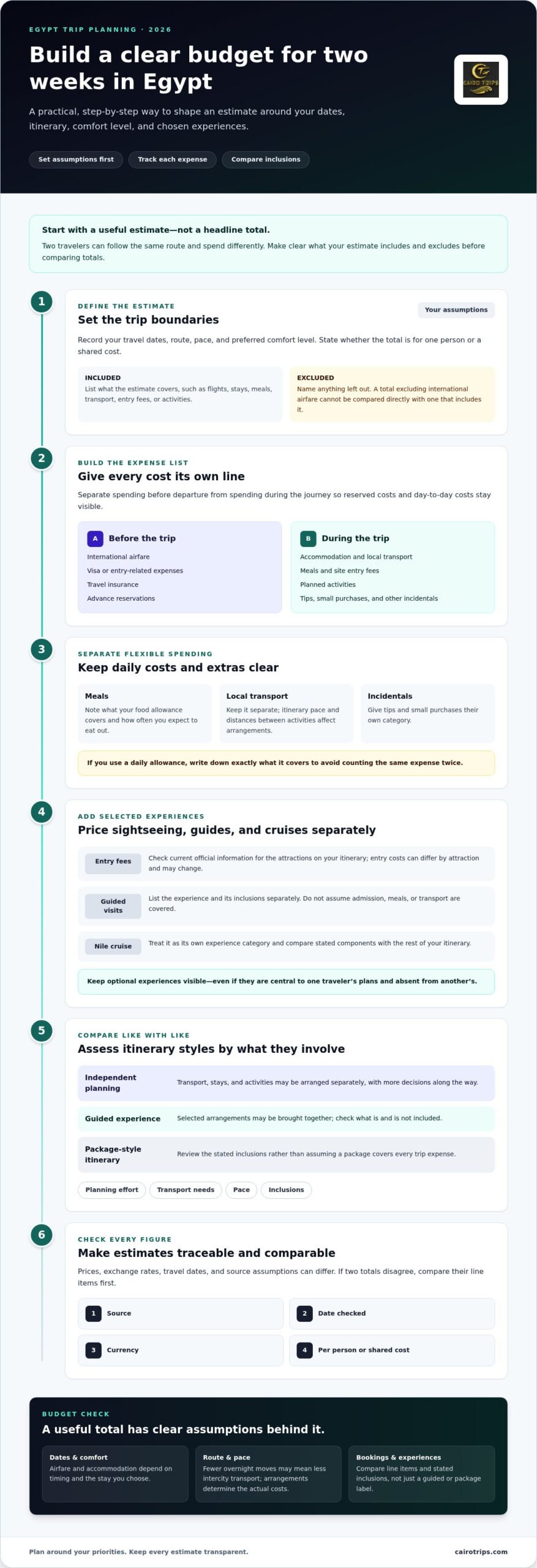
A reliable budget is built in layers: first the shape of the trip, then the expenses attached to it, and finally a review of what your estimate leaves out. Use this process to make the Egypt trip cost for 2 weeks 2026 easier to compare and revise as your plans take shape.
- Define your dates. Set your planned travel window and note how firm it is. Dates affect fares and reservations, so avoid mixing estimates checked for different periods.
- Choose your itinerary style. Decide whether you’ll arrange most details independently, add selected guided experiences, or use package-style planning. This sets the assumptions for your comparison.
- List inclusions. Record airfare, accommodation, meals, local transport, entry fees, activities, and incidentals as separate categories. Keep optional guided experiences visible as choices, not assumed inclusions.
- Source each estimate. Use current, attributable information for date-sensitive items and note its currency and date checked. Check visa and entry requirements with official government or immigration sources, since requirements depend on your nationality.
- Review exclusions. Identify anything not counted, then add a flexible contingency line for unexpected changes or spending. Choose its size based on your plans and comfort, rather than treating a general rule as right for every traveler.
What should a two-week budget worksheet track?
Keep the worksheet simple enough to update. Useful columns include category, estimate, source, date checked, currency, booking status, and included travelers. Add a note about what each estimate covers, especially if a combined arrangement includes only selected activities or services. This makes differences visible before you compare totals.
Mark shared costs, such as a room or a journey booked for several travelers, separately from per-person expenses like individual admissions. Record the shared total and the number of travelers it covers before calculating each person’s share. Otherwise, one estimate may appear higher simply because it shows the group amount while another shows a per-person figure.
How can you avoid outdated or misleading 2026 estimates?
Recheck fares, entry guidance, and exchange-rate assumptions as your planning progresses. Keep the original source and date in the worksheet so you can see which figures may need refreshing. Compare estimates only when their currency, travel dates, and inclusions align; if they don’t, adjust the assumptions before judging the totals.
A trip total is only as reliable as the dates, inclusions, and exclusions behind it. Use that as a final check before treating any estimate as a planning figure. If selected guided experiences are part of your itinerary, explore thoughtfully planned Egypt experiences and account for them as distinct choices within your wider budget.
How can Cairo Trips help shape a thoughtful Egypt itinerary?
A well-planned two-week journey can leave room for landmark moments and quieter discoveries between them. Cairo Trips helps shape selected parts of that experience through guided highlights, historic experiences, Nile dinner cruises, and trips beyond your first stops. These experiences can fit into a wider itinerary, so keep other travel expenses in your overall budget.
Local guides can bring added context to the places and stories you encounter, while thoughtful planning can help selected experiences fit your travel pace. You might prefer guidance for a day centered on major sights, for example, while keeping other days open for independent exploration. It doesn’t have to be all or nothing. Consider where local insight would make a visit more meaningful, then weigh that against the time and planning you want to handle yourself.
Which experiences can complement your wider trip plan?
Guided highlights can suit travelers who value context as they visit important sights. Historic experiences offer another way to engage with Egypt’s heritage and layered stories, with a guide helping connect what you see to its wider significance. A Nile dinner cruise can add a distinct evening to the itinerary, but it’s optional. Choose experiences that reflect your interests rather than treating every available activity as necessary for a two-week visit.
As you consider each option, note where it fits in your schedule and budget. An experience may have its own scope and inclusions, so don’t assume it covers every nearby activity or another part of your trip. Keep international airfare, accommodation, meals, local transport, and other personal expenses visible as separate planning categories unless your own arrangements clearly state otherwise. This lets you assess the role of a guided experience without mistaking it for a full-trip arrangement.
What is a useful next step after comparing budgets?
With your budget categories in place, settle on your travel dates, preferred pace, and the moments you most want to experience. Perhaps you’d like several guided visits, a historic experience, an evening on the Nile, or time exploring beyond your first stops. A short list of priorities can help you decide which experiences deserve a place in your itinerary and which can remain flexible.
The Egypt trip cost for 2 weeks 2026 will be most useful when it reflects your choices, not a one-size-fits-all itinerary. Explore Cairo Trips experiences at your own pace, and consider how guided highlights, historic experiences, Nile dinner cruises, or trips beyond your first stops might complement your plans. Then place the experiences that appeal to you alongside your separately planned travel costs, leaving room for a journey that feels considered and personal.
Let your budget make room for the journey you want
A thoughtful budget isn’t a score to hit. It’s a way to make deliberate choices and leave space for the experiences that feel most meaningful to you. As you refine your Egypt trip cost for 2 weeks 2026, let your interests guide the balance between planned moments and unhurried time. The right itinerary is the one that feels comfortable for your pace and priorities, not simply the one with the lowest total.
If you’re ready to shape selected experiences around what draws you to Egypt, explore Cairo Trips’ options for thoughtful planning and expert local insight. From guided highlights and historic visits to Nile dinner cruises and experiences beyond your first stops, choose what complements your wider plans. Explore Egypt experiences with Cairo Trips and take the next step toward a journey that feels personal, well-considered, and full of discovery.
Frequently Asked Questions
How much should two people budget for a two-week trip to Egypt in 2026?
A mid-range planning benchmark for two people is about $4,200 to $7,000 total, excluding international airfare. That reflects the estimate of $2,100 to $3,500 per person for two weeks. Treat it as a starting point, not a fixed quote: dates, comfort preferences, and activities can shift your total. Check that your calculation covers both travelers’ accommodation and any optional cruise or guided experiences.
Does a two-week Egypt trip budget include a Nile cruise?
Only if you include one in your itinerary and count its cost as a separate line. A cruise is an optional experience, not an automatic part of every two-week trip estimate or guided itinerary. For a fair comparison, note the cruise option’s stated inclusions and identify expenses you’ll arrange separately. If you’re considering a dinner cruise, treat it as a distinct evening activity rather than assuming it covers other travel days.
Are flights and hotels included in Egypt tour prices?
Not necessarily. Inclusions vary by arrangement, so don’t assume a tour or experience price covers flights or accommodation. Cairo Trips offers travel experiences, not international airfare or hotel accommodation. For a clear comparison, keep those costs in separate budget lines unless a particular itinerary explicitly states otherwise. Also check whether meals, site entry, and transport are part of the experience or need their own allowance.
Is independent travel or a guided trip better value for two weeks in Egypt?
Neither approach is always better value; it depends on how you weigh flexibility, planning time, and local context. Independent arrangements let you shape each day, while selected guided experiences can offer expert insight for particular visits. For example, you might plan most days independently and choose guidance for a history-focused outing. Compare the specific inclusions and separate costs, rather than assuming a guided option covers the full journey.
What is the biggest expense on a two-week Egypt trip?
There isn’t one biggest expense for every traveler. International airfare can be a substantial upfront item, while accommodation adds up across the full stay; an itinerary with several optional activities or transport connections can shift the balance further. To identify your largest category, total each line for both travelers and the entire trip, not just one day. Then check whether shared expenses, such as a room, are counted once or per person.
How can I check whether an Egypt trip estimate is up to date?
Check the source and date for each figure, then revisit time-sensitive information as your plans firm up. Use official sources for visa and entry guidance that applies to your nationality, and refresh fare, admission, and exchange-rate estimates before relying on them. Compare figures only when dates, currency, and inclusions match. A worksheet that records those details helps reveal whether a total is current or needs another look.